What if the secret to your most productive workday isn't a third cup of coffee, but an hour of total stillness before the world begins its noisy demands? Many of us live in a constant state of being "wired but tired," where the mind continues to race even as the body reaches for rest. You might find yourself searching for the best time for float session bookings, perhaps worrying that a morning dip will leave you too groggy for meetings or fearing that an evening escape might unexpectedly disrupt your sleep patterns.
It's completely normal to feel hesitant when you're trying to protect your limited downtime. This guide will help you align your sensory deprivation experience with your body's natural rhythms to achieve peak mental and physical results. We'll explore the distinct differences between morning and evening sessions, help you build a strategy based on personal goals like creative flow or deep recovery, and provide practical tips to prepare for any time slot. By the end, you'll know exactly how to step into the water at the moment your body needs it most.
Key Takeaways
- Sync your session with your internal clock to unlock a deeper state of relaxation that lingers long after you leave the tank.
- Discover the unique mental advantages of morning floats for creativity compared to the restorative power of evening sessions for sleep.
- Identify the best time for float session scheduling based on your personal needs, whether you're seeking athletic recovery or a creative breakthrough.
- Learn the essential 4-hour rule for caffeine and meal timing to prevent physical distractions from interrupting your journey into weightlessness.
- Find the ideal balance for your schedule by choosing between 60-minute and 90-minute durations to maintain your mental sanctuary.
The Science of Timing: Does the Best Time for a Float Session Exist?
The search for the best time for float session bookings often leads to a simple, well-intentioned answer: whenever you can fit it in. While any moment of stillness is valuable, the true "best time" is actually a personal intersection where your daily schedule meets your specific physiological goals. This concept, often called Bio-Floating, involves matching your time in the water to your body's natural internal rhythms. By understanding how your biology shifts from sunrise to sunset, you can transform a standard session into a precision tool for recovery or mental expansion.
Your brain processes the absence of external stimuli quite differently at 8 AM compared to 8 PM. In the early hours, your mind is often fresh but beginning to rev up for the day's tasks. By evening, it has been bombarded by thousands of micro-decisions and digital alerts. To understand why this timing matters, it helps to first ask: What is an isolation tank? At its core, it's an environment designed to remove the "noise" of the world, allowing your nervous system to recalibrate based on its current state. Your internal clock dictates how that recalibration feels.
Understanding Your Internal Clock
Your body follows a circadian rhythm that regulates everything from hormone release to core temperature. Cortisol, our primary stress hormone, naturally peaks shortly after we wake up to help us face the day. Floating during this peak can help "blunt" the sharp edge of morning anxiety, setting a calm tone for the hours ahead. As the day progresses, your body temperature rises and then begins to dip in the late evening, signaling that it's time for rest. A session timed with this natural cooling phase can deepen the transition into sleep. Additionally, your brain's "default mode network," the part of the mind active during daydreaming and self-reflection, reacts more vividly when it hasn't been exhausted by twelve hours of constant stimulation.
The Psychological Transition
The success of your experience often depends on the "buffer effect." This is the time your mind requires to shift from a high-energy "doing" state into a passive "being" state. If you rush into a tank immediately after a stressful meeting, your brain may spend the first twenty minutes simply processing the day's events. Morning floaters often find this transition easier because the day hasn't fully "claimed" their attention yet. For first-time guests, booking a mid-morning or early afternoon slot can often reduce the mild anxiety of the unknown, as the body is fully awake and feels more grounded than it might during the quiet, dark hours of a late-night session.
Morning vs. Evening: Comparing the Physiological Benefits
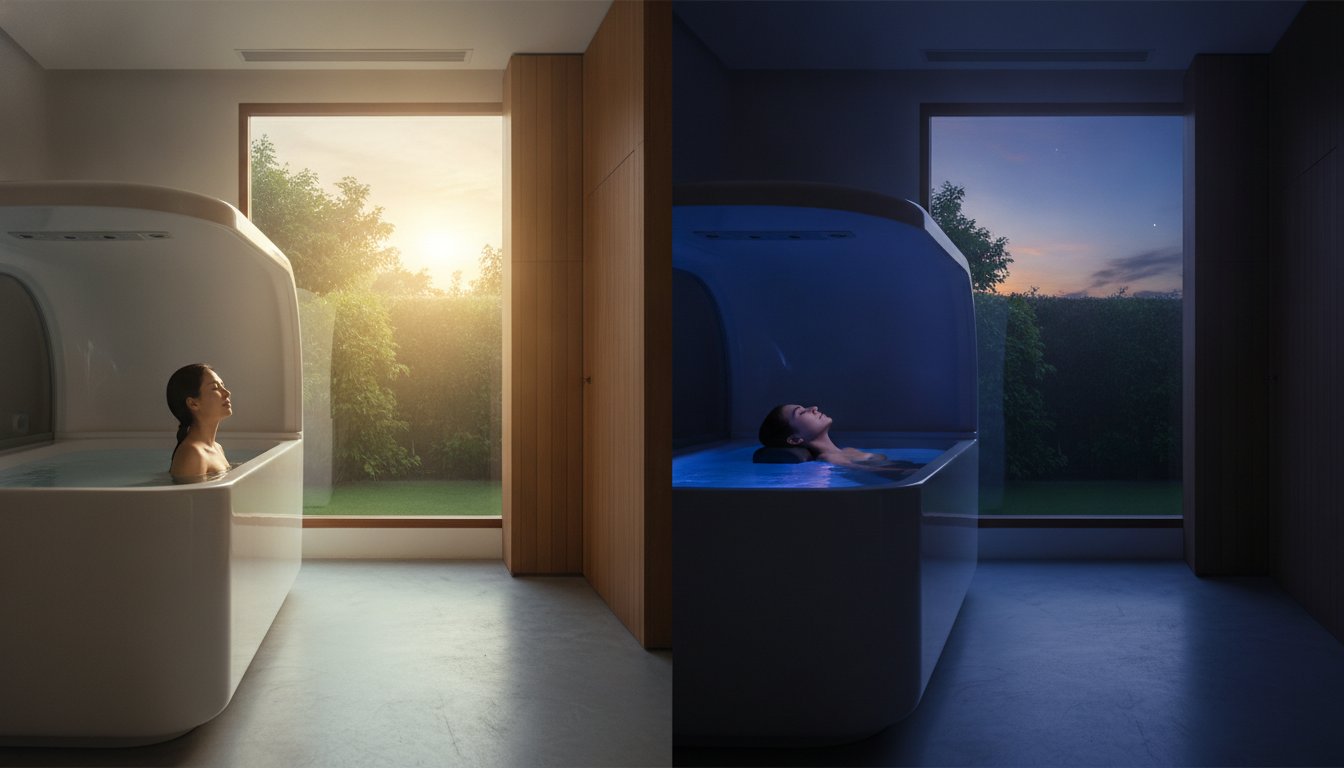
Choosing the best time for float session appointments often feels like a choice between two entirely different therapies. While the physical environment remains the same, your body's receptivity to the experience shifts as the sun moves across the sky. In the morning, you're a blank canvas. By the evening, you're a complex tapestry of the day's interactions, stresses, and physical movements. Understanding these physiological differences allows you to use the tank as a precision tool for your specific wellness goals.
The Morning Float: A Mental Blueprint
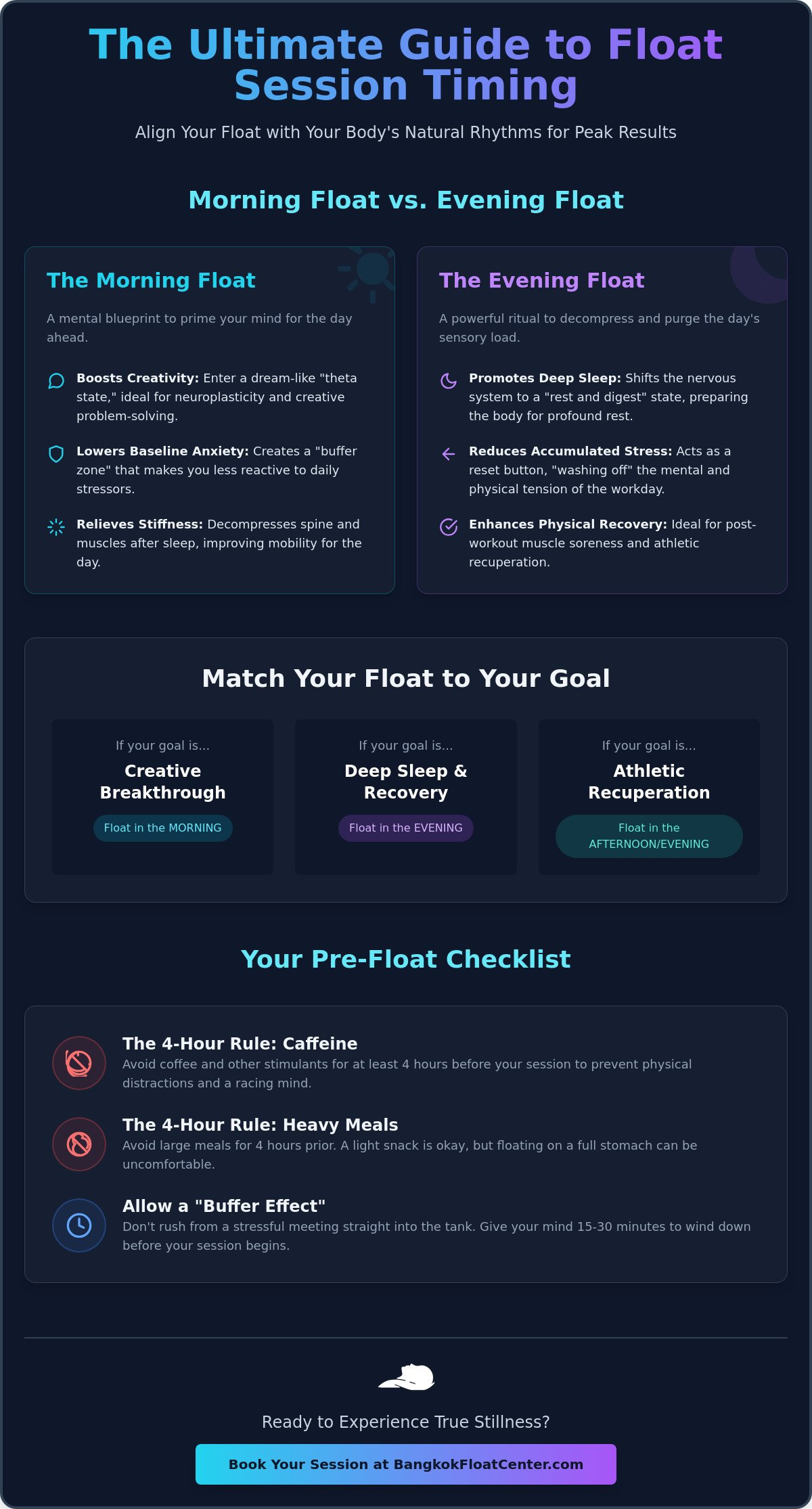
Starting your day in zero gravity provides a unique mental blueprint for the next 24 hours. When you float early, you enter a prolonged "theta state," a dream-like frequency usually only accessible just before falling asleep or waking up. This state is a goldmine for neuroplasticity and creative problem-solving. By removing all sensory input before the day's distractions begin, you can lower your baseline anxiety levels significantly. Many people find that this early stillness creates a "buffer zone" that makes them less reactive to traffic, emails, or high-pressure meetings later in the afternoon. Beyond the mind, morning sessions provide relief for joint stiffness. This "Zero Gravity Therapy" effect allows your spine and muscles to decompress after hours of static sleep positions, improving your mobility before you even take your first steps into the office.
The Evening Float: Decompressing the Day
If the morning is about priming, the evening is about purging. An evening session serves as a ritual to "wash off" the accumulated sensory load of a modern workday. Scientific evidence for flotation therapy suggests that the practice is highly effective at shifting the nervous system from a "fight or flight" state into a parasympathetic "rest and digest" mode. This transition is essential for those who feel "wired but tired" when their head hits the pillow. During an evening float, your skin absorbs magnesium from the Epsom salts, which aids in muscle relaxation and prepares the body for deep REM and slow-wave sleep. For those struggling with chronic insomnia, a late-night session can provide a "post-float glow" that silences the internal monologue, making the journey into sleep feel effortless rather than a struggle. If you're ready to experience this transition, you can explore our sanctuary to find a time that fits your rhythm.
Afternoon floats offer a different benefit altogether. Often called the "ultimate reset," a mid-day session can effectively erase the energy slump that typically hits between 2 PM and 4 PM. Instead of reaching for caffeine, forty minutes of weightlessness can provide the mental clarity of a full night's sleep, allowing you to finish your day with renewed vigor. This timing is particularly effective for those who need to maintain high performance through late evening events or social commitments.
Goal-Oriented Floating: When to Book Based on Your Needs
While the cycle of the sun influences your baseline, your specific objectives often dictate the best time for float session bookings. A professional athlete seeking muscle repair has different needs than a novelist hunting for their next plot twist. By shifting from a general wellness mindset to a goal-oriented strategy, you can use the tank as a precision instrument for your lifestyle. The "best" time isn't just about the clock; it's about what you want to achieve once you step out of the water.
For those focused on physical performance, the "golden window" for recovery typically falls between 2 to 6 hours after your workout. This timing allows your body to begin its natural inflammatory response before the weightlessness of the tank intervenes to accelerate the process. Floating during this period helps flush metabolic waste and reduces the "heavy" feeling in limbs that often follows high-intensity training. It's a strategic move that turns a rest day into an active recovery powerhouse.
Travelers and busy professionals can also use timing to combat the exhaustion of a hectic schedule. If you've just landed in a new time zone, booking a session as soon as possible can help reset your internal clock. This sensory reset signals to your nervous system that it's time to recalibrate, often bypassing the worst of jet lag. Similarly, a "Friday Float" acts as a vital circuit breaker, ensuring that the stress of the work week doesn't follow you into your weekend sanctuary.
Floating for Physical Performance
Maximizing the benefits of zero gravity therapy is essential for anyone pushing their physical limits. In the tank, the absence of pressure points allows for efficient lactic acid removal and deep spinal decompression. This is particularly vital after heavy lifting or long periods of sitting at a desk. By timing your float after a physical peak, you encourage faster tissue repair and a quicker return to your peak state. Your body finally gets the chance to breathe without the constant pull of gravity.
Floating for Mental Mastery
Strategic pauses are the hallmark of high performers. Scheduling a 60 minute float session during high-stakes projects can sharpen your decision-making by clearing mental clutter. You'll likely experience the "Post-Float Glow," a state of calm alertness that is perfect for social or professional engagements. Instead of feeling drained by a busy week, you step back into the world with a sense of clarity and renewed focus. This mental mastery comes from allowing the brain to enter a theta state, where creative breakthroughs feel less like a struggle and more like a natural discovery.
Preparing for Your Session: A Time-of-Day Checklist
Preparation for your journey into weightlessness isn't a one-size-fits-all ritual. The way you prime your body at dawn differs significantly from how you might unwind as the sun sets. While the goal remains the same, your biological state at these times requires a tailored approach. To find the best time for float session success, you must look at your daily habits through the lens of sensory deprivation. Your mind needs a runway to land safely in stillness, and that runway changes based on the clock.
One of the most critical factors is caffeine management. We generally recommend a strict 4-hour caffeine-free window before your appointment. For evening floaters, this is usually simple. For morning enthusiasts, however, this can be a challenge. If your session is at 9 AM, that 5 AM espresso is your last call. Many find it easier to skip the morning stimulant entirely to avoid the "caffeine jitters," which can feel amplified when you're floating in total silence. Similarly, meal timing requires a delicate balance. You don't want a growling stomach to become the only sound you hear, yet a heavy meal can make you feel sluggish and uncomfortable in the water.
The Morning Prep Guide
The biggest hurdle for early morning sessions is the "digital wake-up." Most of us reach for our phones immediately, but for a morning floater, this is counterproductive. Skip the news, social media, and work emails before you arrive. This prevents your brain from latching onto external stressors before you've even touched the water. Regarding hydration, drink plenty of water an hour before you arrive, then stop. This ensures you're hydrated without the need for a mid-session bathroom break. A light breakfast, such as a piece of fruit or a slice of toast, provides enough energy to keep your digestive system quiet without causing bloating.
The Evening Prep Guide
Evening sessions require a "work-brain" transition. If you step directly from a high-stakes boardroom meeting into the quiet of the sanctuary, your brain will likely spend the first half of your session processing spreadsheets. We suggest arriving 15 minutes early to sit in quiet reflection before entering the tank. Avoid heavy dinners; a large meal redirects blood flow to your stomach, which can interfere with the deep physical relaxation you're seeking. Finally, plan your post-float glow activities in advance. Whether it's a quiet walk or reading a book, ensure you have a peaceful environment waiting for you so you don't undo the serenity you've just achieved.
Ready to align your schedule with your wellness goals? You can book your preferred time slot today and begin your path to total restoration.
Experience Stillness at Bangkok Float Center
At Bangkok Float Center, we've created a sanctuary that transcends the ticking clock of the city outside. While we've explored how your internal rhythms influence your time in the water, our environment remains a constant, reliable partner in your pursuit of peace. Whether you arrive at the first light of dawn or as the city lights begin to flicker, the transition into weightlessness remains a profound act of self-care. Finding the best time for float session appointments is often a personal journey of discovery, and our team acts as your Zen Guide to help you navigate that path.
Our center is designed to be a "circuit breaker" for the modern world. We understand that the transition from a high-energy environment to total stillness requires more than just a tank of salt water. It requires a space where every detail, from the lighting to the acoustics, is curated to support your mental and physical renewal. By stepping into our sanctuary, you're not just booking an appointment; you're claiming a moment of timelessness in a world that rarely stops moving.
Tailoring the Duration to the Time
Time is your most precious resource, so we offer durations that respect the unique flow of your day. A 60min Float serves as a strategic pause for the busy professional, providing a window of clarity that fits comfortably into a lunch break or a morning routine. It's just enough time to reach a theta state and reset your nervous system without disrupting your afternoon momentum. If you have the luxury of an evening wind-down, the 90min Float allows for a deeper, more profound immersion. This extra half-hour is often when the most significant physical releases occur, as the body has ample time to fully surrender to the salt-rich water. For those looking to share this experience, a couple float session offers a unique way to explore shared stillness and weightless connection with a partner.
Your Journey to Weightless Renewal
Your experience begins the moment you step through our doors. Every aspect of our float tank therapy environment is optimized to remove the burdens of daily life. We provide a seamless transition through a range of amenities designed for your comfort:
- Private, rain-style showers to prepare your skin and hair
- Organic toiletries and plush, fresh towels
- A dedicated integration lounge to ground yourself after your session
- Professional guidance to help first-timers select their ideal window
Our expert staff is always available to help you interpret your body's signals and choose the best time for float session bookings based on your evolving needs. We encourage a consistent practice, as this allows you to discover your own biological "sweet spot." Over time, you'll find that the tank becomes a reliable anchor, providing the exact state of being you need, exactly when you need it most. Whether you're seeking a creative spark or a path to deep sleep, your journey to renewal starts with a single step into the quiet.
Step Into Your Ideal State of Being
Your journey toward weightlessness doesn't have to be a guessing game. By aligning your session with your body's natural circadian rhythm, you transform a simple wellness practice into a precise tool for mental and physical mastery. Whether you choose a morning float to prime your creativity or an evening session to wash away the day's sensory load, you're giving your nervous system the rare gift of total silence. Remember that your preparation, from managing caffeine to finding a quiet buffer zone, is just as vital as the time you spend in the water.
Finding the best time for float session bookings is a personal discovery that evolves with your lifestyle. Since 2018, we've provided expert wellness guidance and professional zero-gravity pods to help thousands of guests find their perfect rhythm. Our sanctuary is ready to welcome you whenever you're ready to let go of the world's weight. Don't wait for a "perfect" moment that may never come; create it by listening to what your body needs right now.
Book Your Restorative Float Session Today and experience the profound relief of shared or individual stillness at Bangkok Float Center.
Frequently Asked Questions
Is it better to float in the morning or at night for anxiety?
Morning floats are often superior for managing daily anxiety because they help regulate cortisol spikes shortly after waking. By starting your day in stillness, you build a mental buffer against upcoming stressors. However, if your anxiety is rooted in work day sensory overload, an evening session provides the necessary transition into a calm, restorative state before sleep.
Should I eat before my float session?
You should eat a light snack or a small meal approximately 60 to 90 minutes before you arrive. Entering the tank on a completely empty stomach often leads to distracting digestive noises that can break your focus. Conversely, a heavy meal redirects blood flow to digestion, which may prevent the deep physical relaxation you're seeking. Aim for a balanced, easily digestible option like fruit or toast.
Can I drink coffee before a morning float?
It's best to avoid caffeine for at least 4 hours before your appointment to ensure your nervous system can fully settle. While it's tempting to have a morning coffee, the stimulants can cause subtle muscle twitching or a racing mind that resists the stillness of the tank. If you must have a morning beverage, consider herbal tea or wait until after your session to enjoy your caffeine kick.
Will a morning float make me too tired for the rest of the day?
A morning float typically results in a state of "calm alertness" rather than grogginess. While you may feel deeply relaxed immediately after exiting the pod, the reduction in stress hormones often leads to improved focus and sustained energy throughout the afternoon. This mental clarity makes the early hours a candidate for the best time for float session bookings for those with high stakes creative or professional demands.
How often should I float to see real benefits?
Consistency is the key to unlocking long term neurological benefits. While a single session provides immediate relief, most guests find that floating one to two times per month helps maintain a lower baseline of stress. If you're working through a specific physical injury or a period of intense mental pressure, weekly sessions for a month can help reset your system more effectively.
What should I do if I have a busy schedule and can't find the 'perfect' time?
The best time for float session scheduling is ultimately the time you will actually keep. Don't let the search for the "perfect" window prevent you from experiencing the benefits of stillness. While we discuss biological optimization, any time you can step away from the world's noise is a win for your well being. Our team can help you adjust your preparation to make a squeezed in session feel just as restorative as a perfectly planned one.
Is it safe to float if I’m feeling physically exhausted?
Floating is exceptionally safe and highly recommended when you're feeling physically exhausted. The zero gravity environment removes the burden of your body weight from tired joints and muscles, allowing for deep tissue recovery that isn't possible in a standard bed. It's an ideal way to support your body's natural repair processes when you've pushed yourself to the limit.
How long does the 'post-float glow' actually last?
The "post-float glow" or "afterglow" typically lasts anywhere from several hours to two full days. This duration depends on how quickly you return to high stress environments or digital screens. By planning a quiet evening or a slow morning after your session, you can extend this sense of serenity and mental clarity, allowing the benefits to permeate your entire week.