The hour you spend suspended in silence is only half the journey; the real magic happens in the fragile window after you step back onto solid ground. You know that profound sense of weightlessness, where the world's noise finally fades into a soft, distant hum. It's a state of being we call the "post-float glow," yet all too often, the rush of traffic or the persistent ping of a smartphone shatters that peace before you even reach your front door. It's frustrating to feel those hard-earned benefits evaporate the moment you re-engage with the hectic pace of daily life.
Discovering what to do after float therapy is the secret to protecting this newfound clarity and ensuring your physical relaxation lasts for days. In this guide, we'll walk you through a gentle, restorative protocol for your first four hours post-float. You'll learn how to properly rinse away salt residue, optimize your body's magnesium absorption, and transition back to reality without losing your sense of internal stillness. We'll show you how to turn a temporary escape into a lasting foundation for your mental and physical well-being.
In this guide, you’ll learn how to nurture your post-float glow:
- Physical Restoration: The essential steps for a thorough post-float shower and why loose, breathable clothing is vital for your comfort.
- Hydration & Minerals: How to support your body while it continues to process magnesium long after you leave the tank.
- Mental Sanctuary: Strategic advice on what to do after float therapy to protect your clarity, including the power of a digital detox.
- Managing Reality: Tips for navigating "float fog" safely and why you should avoid high-stress scheduling immediately after your session.
- The Path to Wellness: Understanding the cumulative benefits of regular floating and how to track your personal journey toward serenity.
The Immediate Aftermath: Essential Post-Float Tips for First-Timers
The silence of the tank lingers even as you step back into the soft glow of the room. Your body feels both heavy and light; it's a profound sensation of deep parasympathetic activation often called "post-float fog." To appreciate this shift, it helps to recall what an isolation tank is; a tool designed specifically to strip away the external stimuli that usually keep your brain in a state of high alert. When you exit, your senses are heightened, and your nervous system is in a state of rare, fragile equilibrium. Knowing what to do after float therapy in these first few minutes is vital for preserving that serenity.
The fog is a gift. It represents a shift from your "fight or flight" response to a state of "rest and digest," allowing your mind to process experiences without the usual static of modern life. However, this heavy, blissful state can make simple tasks feel a bit surreal. This is why we recommend moving slowly. Before you even consider reaching for your phone or car keys, focus on the immediate physical needs of your body as it transitions back to the world of gravity and sound.
The Art of the Post-Float Shower
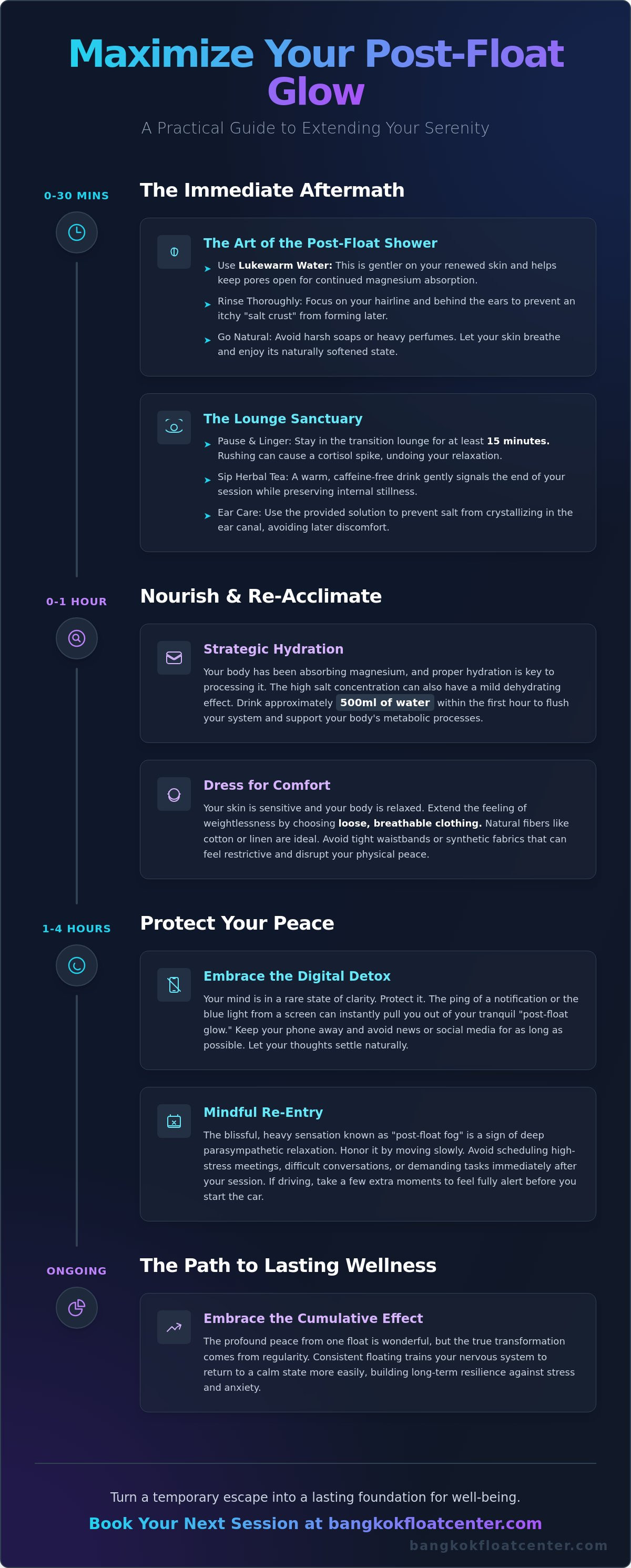
Your post-float shower is more than a simple rinse; it's a continuation of the therapy. We recommend using lukewarm water rather than a steaming hot blast. While a hot shower might feel tempting, lukewarm water is gentler on your skin and helps keep your pores open, which may assist in the continued absorption of magnesium. Focus specifically on your hairline and the areas behind your ears. If magnesium sulfate crystals are left to dry, they can create a "salt crust" that feels itchy or tight later in the day. Skip the heavy perfumes or harsh chemical soaps for now. Let your skin breathe and remain in its natural, softened state for as long as possible.
Transitioning in the Lounge
Resist the urge to rush. One of the most important aspects of what to do after float therapy is giving yourself permission to linger in the transition lounge for at least 15 minutes. Rushing straight to a high-stress meeting or into heavy traffic can trigger a sharp cortisol spike, effectively undoing the deep relaxation you just achieved. Use this quiet space to let your equilibrium return to normal. Most sanctuaries offer herbal tea; sipping a warm, caffeine-free blend provides a gentle sensory signal to your body that the session has ended while maintaining your internal stillness. Before you leave, ensure you use the provided ear-care solution to prevent any salt from crystallizing in the ear canal, which can cause discomfort later.
Finally, consider your attire. Loose-fitting, breathable clothing made of natural fibers like cotton or linen is the only real choice. Your skin will feel sensitive and renewed, and tight waistbands or synthetic fabrics can feel needlessly restrictive. By choosing comfort, you extend the physical feeling of weightlessness into the rest of your day.
Nourishing the Glow: Hydration and Nutrition Protocols
After you emerge from the weightless embrace of the tank, your body continues to process the experience on a cellular level. The high concentration of Epsom salt, or magnesium sulfate, used to create buoyancy does more than just keep you afloat. Your skin, the body's largest organ, has been quietly absorbing this vital mineral for the duration of your session. This absorption process doesn't stop the moment you dry off; it sets the stage for the deep, lasting relaxation that follows. A clinical trial on floatation-REST suggests that these sessions can significantly reduce stress and anxiety, and your post-float nutrition plays a vital role in anchoring those benefits. Understanding what to do after float therapy from a nutritional standpoint ensures you don't accidentally shock your system out of its peaceful state.
Strategic Hydration
Water is your most essential companion in the hours following your session. While you've been floating, the high salt content of the water can have a mild dehydrating effect on the skin's surface. We recommend drinking approximately 500ml of pure, filtered water within the first hour of finishing. This hydration helps flush your system and supports the metabolic processes triggered by the magnesium absorption. Avoid sugary sports drinks or sodas. These often contain artificial colors and high fructose corn syrup that can cause a restless energy spike. Instead, opt for gentle herbal infusions or water with a squeeze of fresh lemon to balance your electrolytes naturally without the sugar crash.
The Best Foods for Post-Float Recovery
Your brain is currently in a "clean slate" state, making this a perfect window to choose foods that nourish rather than deplete. Focus on light, magnesium-rich snacks that complement what your body has already absorbed through the skin. A small handful of raw almonds, pumpkin seeds, or a square of high-quality dark chocolate can provide sustained energy. Avoid heavy, calorie-dense meals immediately after your session. A large, greasy meal requires significant energy to digest, which can turn your pleasant "post-float fog" into an overwhelming, lethargic heaviness. By choosing light, whole foods, you maintain the sense of physical weightlessness you achieved in the tank.
Be particularly mindful of stimulants like caffeine. After an hour of sensory deprivation, your central nervous system is incredibly sensitive. A double espresso right now can feel like a jolt of lightning, potentially triggering the very "fight or flight" response you just worked so hard to quiet. Stick to calming liquids for at least two hours to allow your nervous system to settle into its new, relaxed baseline. If you're ready to experience this deep state of nourishment for yourself, you might find that a 90-minute float provides the perfect duration for a total system reset.
Preserving Mental Clarity: The Art of Doing Nothing
The silence you cultivated in the tank doesn't have to end when the lights come up. In fact, the most profound part of the experience often begins the moment you leave. Your brain is in a state of rare susceptibility; it's unburdened by the usual sensory debris of urban life. This is why deciding what to do after float therapy regarding your mental environment is just as important as your physical recovery. If you immediately dive into a social media feed or the evening news, you're essentially pouring static into a clear pool. Your mind needs time to stay in this expansive state before the demands of the world begin to crowd back in.
A 90-minute float often triggers a unique phenomenon: a surge of creative clarity. Because your brain has had significant time to drift into deeper states, you may find that solutions to old problems or entirely new ideas begin to surface. This isn't the time for logistics or spreadsheets. It's a time to let those thoughts breathe without the pressure of immediate execution. Many artists and thinkers use this window to overcome creative blocks, as the mind is finally free from the "noise" that usually stifles original thought. The silence is fertile; give it the space it deserves.
Capturing the Insights
During your session, your brain likely spent time in the Theta-wave state, a frequency usually reserved for the moments just before sleep or during deep meditation. This state is the birthplace of insight. To capture these whispers, we recommend keeping a journal nearby. Writing by hand allows you to process these thoughts slowly, keeping you in the present moment. Avoid the temptation to solve "logistical" problems like your grocery list or tax returns. Instead, use this mental stillness to set a single, positive intention for the week. This anchors your experience, turning a fleeting feeling into a purposeful direction.
Gentle Integration
Your nervous system is currently a finely tuned instrument. To maintain this, seek out quiet environments and natural light. A shopping mall or a crowded street can feel like an assault on your senses. Instead, consider a short walking meditation in a park. Focus on the sensation of your feet touching the earth, a stark but grounding contrast to the weightlessness of the tank. Delay checking your emails or work messages until the "glow" has fully settled, usually about two hours. By protecting your mental sanctuary, you allow the benefits of your session to resonate through your entire evening.
Planning Your Schedule: Avoiding the 'Reality Shock'
The most common mistake people make is treating their float like a quick gym session they can squeeze between back-to-back meetings. If you jump from the deep silence of the tank directly into a high-stakes negotiation or a tense family discussion, the "reality shock" can be jarring. Your nervous system is currently operating at a different frequency, and forcing it to accelerate too quickly can lead to a sense of irritability or exhaustion. When considering what to do after float therapy, your calendar should be your first priority. By protecting the hour following your session, you allow your body to integrate the experience rather than discarding it for the sake of a deadline.
Safety is another critical factor that many guides overlook. The "float fog" we discussed earlier isn't just a feeling; it's a physical state of deep relaxation that can subtly alter your reaction times. Before you get behind the wheel, take a moment to truly assess your alertness. If the world still feels a bit soft or distant, sit in your car for a few minutes or walk around the block. You want to ensure your focus has returned to the physical requirements of driving before you enter busy traffic. This isn't a sign of impairment, but rather a sign of how deeply your body has let go of its usual tension.
The Buffer Hour Rule
We suggest implementing a "Buffer Hour" into your day. For sixty minutes after you leave the center, schedule absolutely nothing. This isn't just about avoiding work; it's about creating a transition zone. If you have national travel plans or a long commute, this hour is even more vital. Tell your colleagues or family that you'll be "offline" for a while. Find a quiet park or a peaceful cafe where you can simply exist without an agenda. This protects the investment you've just made in your mental health and prevents the immediate return of high cortisol levels.
Evening vs. Morning Sessions
The time of day you choose to float will dictate your post-session protocol. An evening float is the ultimate sleep hack. By removing all external stimuli late in the day, you signal to your brain that it's time to shut down, often helping to quiet the mind for those who struggle with insomnia. Conversely, a morning float can lead to a day of "calm productivity." You'll find yourself moving through tasks with a steady, unhurried focus that is far more effective than the usual caffeinated rush. Tailoring your schedule to these natural rhythms allows the glow to stay with you longer.
If you're ready to experience this deep state of transition, you can book your 60-minute float session and start planning your perfect buffer hour today.
Extending the Benefits: Regularity and Long-Term Wellness
The tranquility you feel right now is more than just a fleeting sensation; it's a skill your nervous system is learning to master. While the immediate protocol for what to do after float therapy focuses on the first few hours, the long-term strategy is about building a foundation of resilience. Your body and mind possess a remarkable capacity for memory. With each subsequent visit, you'll find that the transition into deep relaxation happens faster and with less effort. The second and third floats often feel significantly more profound because the novelty has faded, leaving only the pure experience of stillness. You're not just resting; you're training your brain to find its way back to peace more efficiently.
To truly understand the impact of this practice, we recommend tracking your progress over several months. Notice the subtle shifts in your daily life. Are you reacting more calmly to traffic? Is the tension in your shoulders less persistent during the work week? By paying attention to these changes in stress levels and muscle recovery, you begin to see floating as a vital maintenance tool rather than a one-time luxury. It becomes a sanctuary you can return to whenever the noise of the world becomes too loud to bear.
The Power of Frequency
For most practitioners, a "maintenance float" every two to four weeks is the ideal sweet spot. This frequency prevents stress from accumulating to unmanageable levels and keeps your magnesium levels topped up. A 60-minute session is perfect for a consistent reset, while a 90-minute deep dive offers the time needed for more intense mental processing or physical recovery. Regularity creates a cumulative effect; the more often you float, the longer that post-session glow tends to linger in your system. You'll soon find that the mental clarity you once only found in the tank starts to follow you into your everyday environment.
Shared Experiences
There is a unique beauty in the "after-glow" that follows a couple float session. Sharing this state of deep relaxation with a partner can create a powerful, non-verbal bond. We suggest using the time after a shared session to discuss the sensations or insights you both experienced in the quiet. It's a way to build a shared wellness ritual that prioritizes rest and mutual support. Whether you choose to float alone or with a loved one, the goal remains the same: to carry that weightless serenity back into your shared life. Ready to maintain the glow? Book your next 60 or 90-minute float today and ensure your journey toward long-term wellness continues.
Nurturing Your Path to Lasting Serenity
Mastering what to do after float therapy is the bridge between a fleeting moment of peace and a sustainable lifestyle of wellness. By honoring the buffer hour, choosing nourishing hydration, and allowing your mind to rest in its creative, post-tank state, you protect the profound investment you've made in your mental health. These small, intentional steps ensure that the weightlessness you found in the water continues to support you as you navigate the complexities of your daily world. The silence you've cultivated is a gift that deserves protection and space to breathe.
Our professional sanctuary provides a dedicated space for stress relief and recovery through 60 and 90-minute deep relaxation sessions. With private individual and couple float tanks available, we offer a modern approach to the timeless human need for rest. Whether you're seeking a solitary reset or a shared wellness ritual, we're here to guide your journey toward total stillness. Experience weightless relaxation, book your float session now. Your transformation doesn't end when you leave the tank; it's a quiet renewal that grows with every visit.
Frequently Asked Questions
Is it safe to drive immediately after a float session?
Yes, it's generally safe to drive, but you should wait at least 15 to 20 minutes in our lounge first. This allows the initial "float fog" to dissipate and your spatial awareness to return to normal. Most visitors find that a short walk or a cup of herbal tea provides the grounding needed to handle traffic safely. Never rush behind the wheel if you still feel a bit dreamy or distant.
Should I eat a big meal after floating in Epsom salts?
You should avoid eating a large, heavy meal immediately after your session. Digestion requires significant energy, and a heavy meal can turn your light, airy feeling into a state of sleepy lethargy. Instead, opt for light, nutrient-dense snacks like almonds, fruit, or a salad. This supports the body as it continues to process the magnesium absorbed during your float without overwhelming your system.
How long does the "post-float glow" typically last?
The "post-float glow" typically lasts between 24 and 48 hours for most individuals. This window of mental clarity and physical ease can be extended by following the protocol for what to do after float therapy, such as avoiding digital screens and stimulants. With regular sessions, many people find that this sense of serenity begins to last even longer between visits as the body learns to maintain its balance.
What happens if I get salt in my ears after I leave the center?
If you notice salt crystallization in your ears later, don't panic or use cotton swabs. Simply mix a solution of half warm water and half white vinegar to gently rinse the ear canal. This dissolves the magnesium sulfate crystals effectively. To prevent this, always use the provided earplugs and rinse your ears thoroughly with the specialized solution provided in our private suites before you head home.
Can I go to the gym or exercise after float therapy?
Light movement like yoga or a gentle walk is wonderful, but we recommend avoiding high-intensity workouts immediately after a float. Your muscles are in a state of deep relaxation, and your coordination might be slightly altered. Pushing for a personal best at the gym could lead to strain. Give your body at least four hours to transition before engaging in heavy lifting or vigorous cardiovascular exercise.
Why do I feel so tired after my first float session?
Feeling tired after your first session is a common sign that your body is finally releasing long-held physical and mental tension. This "restorative fatigue" happens as your nervous system shifts from a chronic state of alert into deep recovery. It's also a natural response to the increased magnesium in your system. Listen to your body and allow yourself an early night; you'll likely wake up feeling exceptionally refreshed.
Should I shower again when I get home?
You don't need to shower again at home if you performed a thorough rinse at the sanctuary. However, if you feel any "tacky" or itchy spots on your skin, it means some salt residue remains. A quick, lukewarm rinse without harsh soaps will clear this up. Most clients find that the magnesium leaves their skin feeling incredibly soft, so a second shower is usually a matter of personal preference.
Can I go back to work immediately after a sensory deprivation session?
While you can technically go back to work, it's better to avoid high-stress environments if possible. Sensory deprivation puts your brain into a creative, reflective state that is often at odds with fast-paced corporate demands. If you must work, try to focus on solo tasks or creative projects rather than intense negotiations. Planning what to do after float therapy should ideally include at least two hours of low-pressure activity to anchor your results.