What if the most important thing you bring to your first float session is actually nothing at all? It's completely natural to feel a flutter of anxiety or uncertainty when deciding what to wear in a float tank for the first time. You might worry about your privacy, or perhaps you're concerned that the dense Epsom salts will ruin a favorite swimsuit. These are common hurdles on the path to serenity; it's okay to seek clarity before you dive into the quiet.
We understand that feeling physically secure is the vital first step toward letting go of the external world. This guide will help you discover the ideal attire for maximum relaxation and teach you how to prepare your body for a perfect weightless experience. We'll uncover why "sensory silence" often starts with the skin, how to protect your hair and jewelry, and what essentials you should pack to ensure your transition from the busy world to total stillness is as seamless as a calm breath.
Key Takeaways
- Learn why "sensory silence" is best achieved by choosing to float nude, removing every physical barrier between you and the therapeutic water.
- Understand exactly what to wear in a float tank to balance your personal comfort with the goal of total weightlessness and skin-temperature immersion.
- Prepare your body by removing "invisible" distractions like contact lenses and jewelry to prevent salt irritation and maintain deep focus.
- Discover the best post-float clothing choices to preserve your sense of serenity and allow your skin to breathe after absorbing restorative Epsom salts.
- Gain a clear, actionable checklist for your session, whether you are floating solo or sharing the stillness during a couple's experience.
The Golden Rule of Float Attire: Nudity vs. Swimwear
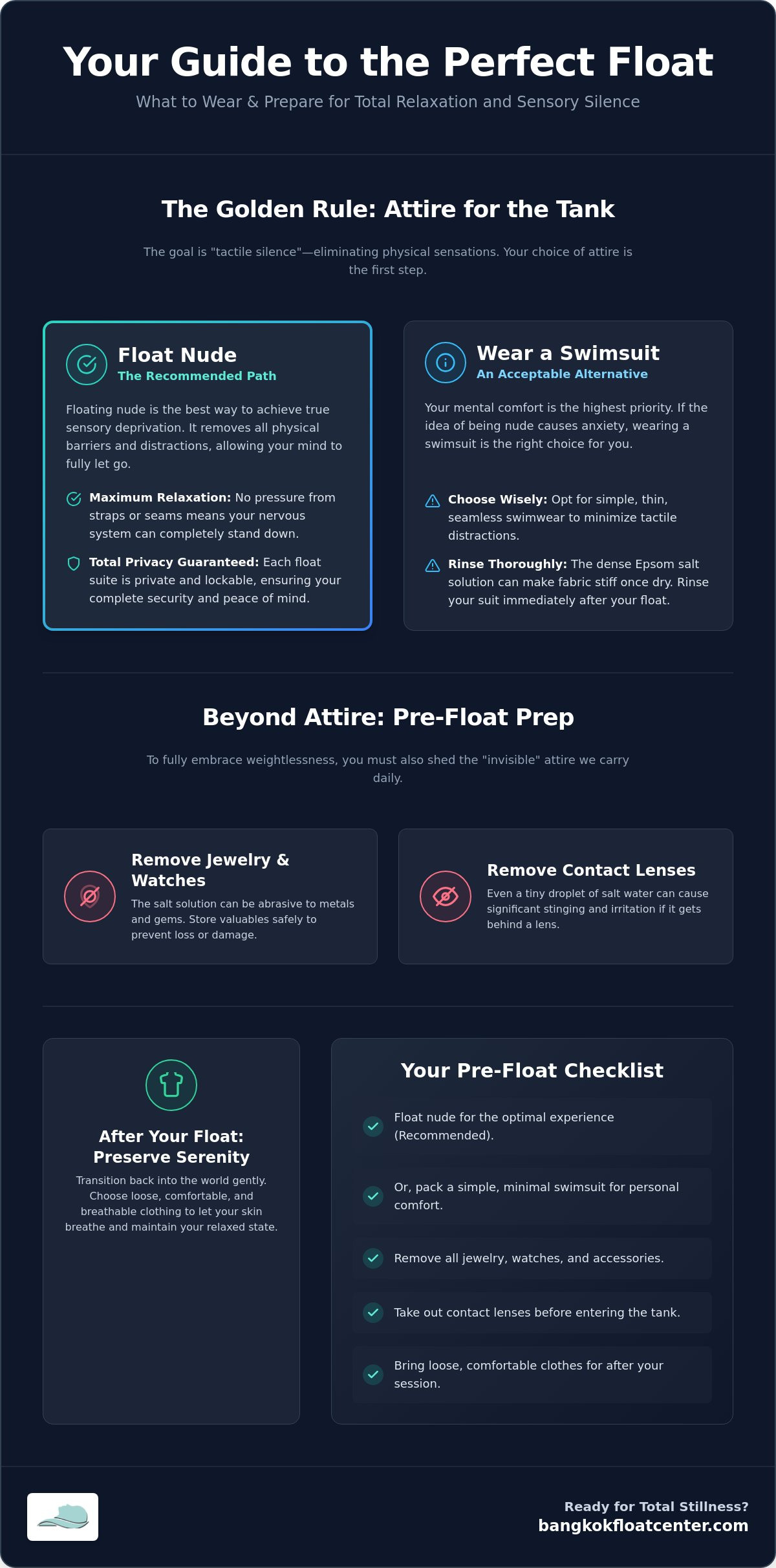
Entering a float tank is an invitation to leave the physical world behind. When you begin to consider what to wear in a float tank, you're actually deciding how much of the outside world you want to bring into your sanctuary. The primary goal of this experience is to achieve "tactile silence." This means eliminating every possible external sensation that could tether your mind to your body. For this reason, most wellness professionals and experienced floaters recommend floating completely nude.
If you are new to this practice, you might wonder What is an isolation tank? and how it functions to create such profound relief. It is a controlled environment designed to mimic the weightlessness of space. In this zero-gravity state, even the lightest swimsuit can feel like a heavy suit. The gentle pressure of a strap or the cling of wet fabric against your skin acts as a persistent reminder of your physical presence, potentially breaking the spell of total serenity.
Privacy is a cornerstone of the modern float experience. Your session takes place in a private, lockable suite equipped with its own shower. You are the only person who enters your float space, ensuring that your choice to float nude remains a personal and secure decision. Regarding hygiene, the high concentration of magnesium sulfate (Epsom salt) acts as a natural disinfectant, and facilities maintain rigorous filtration standards to ensure every session begins in a pristine environment.
Why Nudity Enhances Sensory Deprivation
Sensory deprivation is the intentional removal of 90% of external stimuli. To reach this state, your skin needs to feel nothing but the buoyant, skin-temperature water. Elastic bands and seams create subtle points of pressure that the brain continues to process, which can prevent you from reaching the deepest levels of theta-wave relaxation. Shedding your clothes acts as a psychological ritual; it is the final act of letting go before you drift into the quiet. By removing these physical boundaries, you allow your nervous system to stop scanning for touch, facilitating a faster transition into a meditative state.
When to Choose a Swimsuit Instead
While nudity is recommended, your mental comfort is the most important factor in your recovery journey. If the idea of being nude creates anxiety, that stress will interfere with your relaxation more than a swimsuit would. In these cases, wearing a simple, snug-fitting suit is a perfectly acceptable choice. If you decide on what to wear in a float tank based on modesty, keep these points in mind:
- Choose thin fabrics: Opt for minimalist swimwear with very few seams or ties to reduce tactile distractions.
- The "Salt Effect": The dense salt solution is incredibly restorative for your body, but it can be harsh on delicate fabrics. If you wear a suit, be sure to rinse it thoroughly immediately after your session.
- Post-float stiffness: Without a deep rinse, your swimsuit may dry as stiff as a board once the salt crystallizes in the fibers.
Ultimately, the tank is your space for renewal. Whether you choose the freedom of nudity or the security of a suit, the goal remains the same: a beautiful, weightless escape from the noise of daily life.
Beyond the Suit: Preparing Your Body for the Tank
While deciding what to wear in a float tank is a significant first step, true weightlessness requires shedding more than just fabric. To fully embrace the health benefits of float therapy, you must also consider the "invisible" attire we carry daily. This includes the accessories, products, and even the recent changes we've made to our skin and hair. Preparing your body is just as vital as choosing your clothing to ensure your session remains a sanctuary of peace.
Jewelry and watches should be removed and stored safely before you enter the water. The high-density salt solution is what allows you to float effortlessly, but it can also be abrasive to certain metals and gemstones. Small earrings or rings can easily slip off in the water. Once they sink into the salt solution, they are difficult to find. Most facilities provide a secure, dedicated space within your private suite for these valuables.
If you wear contact lenses, we recommend removing them before your session begins. Even a tiny droplet of the highly concentrated Epsom salt water can cause significant stinging and irritation if it gets trapped behind a lens. Removing them ensures your eyes remain comfortable and your focus stays entirely on the restorative quiet of the tank.
Jewelry and Accessories
Keep your accessories simple or leave them at home. Beyond the risk of salt damage, metal items can become a tactile distraction. A necklace shifting against your collarbone or a watch pressing into your wrist can pull your mind away from the meditative state you are seeking. By clearing these items away, you allow your body to feel truly unburdened and free from the weight of the outside world.
Hair and Skin Preparation
Your journey begins with a mandatory pre-float shower. This step is essential for removing the barriers of perfumes, deodorants, and body oils that can interfere with the water's purity. It's a ritual of cleansing that prepares both your mind and skin for the immersion ahead.
Don't shave or wax on the day of your float. The salt is naturally healing, but it will cause a sharp stinging sensation on freshly sensitized skin or micro-cuts. If you have small existing scrapes, we provide petroleum jelly to create a protective barrier. Simply apply a thin layer over the area to keep the salt from making contact.
To protect the pristine environment and your own aesthetic, follow the 48-hour rule for hair dye and tanning. If you have recently dyed your hair or applied a spray tan, wait at least two days until the color is fully set. This prevents dye from leaching into the tank and ensures your color remains vibrant. Once you have prepared your body, you are ready to experience the profound stillness of a 60-minute float session.
What to Wear After Your Float: The Transition
The moment you step out of the tank, you'll likely feel a profound sense of "post-float glow," a state where your mind is quiet and your muscles are completely relaxed. This transition back to the external world is a sacred time. While you've already considered what to wear in a float tank to achieve weightlessness, the choices you make for your post-float attire are equally important for preserving that hard-won serenity. Your senses will be heightened, and your skin will be exceptionally soft from the magnesium-rich water.
Choosing the right clothing helps prolong the Benefits of Flotation Therapy, such as reduced muscle tension and a lingering sense of calm. Tight waistbands, stiff denim, or complex layers can feel abrasive and restrictive against your revitalized skin. Instead, reach for garments that continue the theme of the session: ease and lack of burden. Your body has just spent an hour or more in total freedom; don't rush to cage it in restrictive fabrics.
Footwear also plays a role in your comfort. After a session, your coordination might feel slightly different as your body re-adjusts to gravity. Slip-on shoes or sandals are far superior to lace-up sneakers or boots. They require less effort to put on and don't require you to bend over and strain your relaxed back muscles immediately after your session. It's about maintaining the path of least resistance.
The Best Fabrics for Post-Float Bliss
Natural fibers are your best allies during this transition. Cotton, linen, or bamboo allow your skin to breathe and maintain its natural temperature as you move from the warm float room back into the outside air. We recommend choosing loose-fitting garments like soft joggers, maxi dresses, or oversized tunics to prolong the feeling of weightlessness. These pieces don't press into your skin, allowing the deep relaxation to linger in your nervous system without the "interruption" of tight elastics.
Managing Salt Residue
A thorough post-float shower is essential for your comfort. While the Epsom salt is incredibly restorative, any residue left on the skin will eventually crystallize, creating a fine white powder that can feel itchy or "crusty" as it dries. Take your time in the shower to rinse your ears and hairline particularly well. These are the areas where salt likes to hide.
Many floaters find that their hair feels thicker and more textured after a session. Bringing a wide-tooth comb or a favorite hairbrush can help you manage this without pulling. If you're driving home, consider placing a small towel over your car seat. Even with a thorough shower and towel-dry, your hair may remain damp, and the towel protects your upholstery from any lingering moisture or salt. By planning your transition with the same care you used when deciding what to wear in a float tank, you ensure your journey back to daily life is as peaceful as the float itself.
Shared Stillness: Attire for a Couple Float Session
Floating with a partner transforms a solitary journey into a shared experience of profound connection. When you enter the water together, you are exploring a unique state of "shared stillness" that can deepen your bond through mutual vulnerability and silence. However, deciding what to wear in a float tank when you aren't alone requires a little more preparation and a gentle conversation with your partner. The goal is to ensure both individuals feel completely secure, allowing the external world to fade away in unison.
While the previous sections emphasized the benefits of nudity for individual sessions, a couple float session Bangkok offers a different dynamic. Your choice of attire should be based on the level of comfort you share with your partner. For many couples, the privacy of the suite makes floating nude the most natural choice, as it preserves the tactile silence that makes the experience so restorative. For others, wearing minimalist swimwear provides a sense of security that allows them to relax more deeply without self-consciousness.
Comfort and Connection
The tanks used for couple sessions are significantly larger than solo pods, designed specifically to accommodate two people without feeling crowded. This extra space means that if you choose to wear a swimsuit, the fabric is less likely to feel restrictive or "heavy" as you drift. Many couples find that after the first few minutes, the physical presence of their partner becomes a comforting anchor rather than a distraction. If you are both comfortable with nudity, it remains the best way to eliminate every physical boundary, helping you both reach a state of total weightlessness more quickly.
Shared Etiquette
Maintaining a "Zen" environment while sharing the water requires a mindful approach to movement. Because the salt solution is so dense, even a small kick or shift in weight can create ripples that might splash your partner. It's helpful to discuss your "float style" beforehand. Will you hold hands to stay connected, or will you each find your own corner of the tank? Keeping movements minimal ensures that neither of you is accidentally disturbed by stray droplets of salt water, which can be quite distracting if they reach the eyes or face.
Silence is the final layer of your attire. Even though you are together, the true power of float tank therapy comes from the absence of speech and external noise. By agreeing to remain quiet, you respect each other's internal journey while still basking in the comfort of a shared presence. Choosing a center that provides private, dedicated suites for couples ensures that your transition from the busy streets to the quiet water is handled with the utmost care and professional expertise. If you're ready to explore this weightless connection together, we invite you to book a Couple 60-minute float and experience the serenity of shared silence.
Preparation Meets Peace: Your Checklist for the Day
True peace begins long before you touch the water. By understanding exactly what to wear in a float tank and how to prepare your body, you remove the final barriers of distraction. This mental clarity allows you to transition into the sensory deprivation tank with a quiet mind, ready for the journey ahead. Professional centers are designed to be sanctuaries of convenience, providing almost everything you need to find your balance. When you arrive, the logistics should be the furthest thing from your mind. High-end float centers act as your guide, handling the details so you can focus entirely on physical recovery and mental release.
By providing essentials like high-quality earplugs to keep the salt water out and organic soaps for your post-float rinse, the center ensures you can arrive with nothing but your desire for relief. This minimalist approach is intentional; it mirrors the stripping away of external stimuli that happens inside the tank itself. When you don't have to worry about packing a heavy bag, your mind starts the process of letting go the moment you walk through the door. You aren't just preparing for a service; you're preparing for a transformation.
The Minimalist Packing List
When you visit a high-end facility, less is truly more. We provide plush towels, earplugs, and specialized soaps and shampoos to ensure your skin and hair are cared for after the salt immersion. You don't need to carry a heavy bag of items you won't use. Instead, focus on the few personal essentials that will help you maintain your post-float glow. If you have long hair, a simple hair tie is helpful for the pre-float shower. Beyond that, your goal is to keep your belongings as light as your body will soon feel.
Your simple 3-step preparation checklist:
- Loose, breathable clothes: Choose something easy to slip into for your journey home.
- A hair tie: Useful for keeping hair managed during your initial cleansing shower.
- An open mind: The most important "item" to bring, ready to release the weight of the day.
Booking Your Session
Choosing the right duration for your first visit is a personal decision that sets the tone for your recovery. A 60-minute session is a wonderful introduction to weightless therapy, offering enough time for your nervous system to settle into a deep state of rest. It's the perfect reset for a busy mind. If you feel you need more time to truly detach from a high-stress week, the 90-minute option provides a more expansive space for deep mental exploration and physical relief.
Preparation is the bridge to peace. When the logistics of what to wear in a float tank are settled, you're free to explore the cosmos within. If you're ready to leave the noise behind and rediscover your center, Book your restorative float session today and begin your journey into stillness. Whether you choose a solo experience or a shared session, the weightless world is waiting to welcome you home.
Step Into Your State of Weightless Connection
Understanding what to wear in a float tank is the final piece of the puzzle that allows you to fully surrender to the quiet. By choosing the freedom of nudity or the security of minimalist swimwear, you've already begun the process of shedding the world's weight. Whether you're preparing for a solo reset or a shared moment of stillness, the right preparation ensures your focus remains on the expansive peace found within the zero-gravity environment. You've learned how to protect your skin, manage your post-float transition, and pack with a minimalist mindset.
Our sanctuary provides the perfect setting for your renewal, featuring private individual and couple suites maintained with professional-grade filtration and the highest hygiene standards. Every detail is designed to guide you toward a state of total stress relief and mental clarity. It's time to leave the noise of daily life behind and discover the profound relief that comes with true weightlessness. We invite you to begin your journey to weightless relaxation here and experience the restorative power of the deep quiet. Your path to serenity is clear, and we're here to support every step of your journey back to balance.
Frequently Asked Questions
Do I need to bring my own towel or robe?
You don't need to bring your own towel or robe as we provide fresh, plush linens and all necessary amenities for your journey into stillness. Our goal is to make your transition as effortless as possible. We supply high-quality towels, earplugs, and organic body care products within your private suite. This ensures you can focus entirely on what to wear in a float tank for maximum comfort rather than managing a heavy bag of gear.
Can I float if I recently dyed my hair?
We recommend waiting at least 48 hours after dyeing your hair before entering the tank to ensure the color has fully set. This precaution protects the purity of our salt solution and prevents your new shade from leaching out into the water. If your hair dye still rinses out in the shower, please postpone your session until the water runs clear to maintain your look and our pristine environment.
Is it okay to wear contact lenses in the float tank?
It's best to remove your contact lenses before your session to avoid irritation from the highly concentrated salt water. If even a tiny droplet of the Epsom salt solution reaches your eye, it can become trapped behind the lens and cause significant discomfort. Removing them allows you to keep your eyes closed and fully immerse yourself in the sensory silence without any worry or physical distraction.
What if I am on my period?
You can absolutely float while on your period provided you use a menstrual cup or a tampon during your session. The high concentration of Epsom salt is naturally sanitizing, and our filtration systems are designed to maintain the highest hygiene standards at all times. Many women find that floating provides deep relief from menstrual cramps and the physical tension often associated with their cycle, offering a welcome moment of serenity.
Should I shave before my float session?
We suggest you avoid shaving or waxing for at least 12 to 24 hours before your appointment to prevent skin irritation. The dense salt solution can cause a sharp stinging sensation on freshly sensitized skin or micro-cuts. If you have any small existing scrapes, we provide petroleum jelly in each suite to create a protective barrier. This simple step ensures you can remain comfortable and focused on your mental journey.
Do most people wear a swimsuit during a couple float?
While many individuals choose to float nude to eliminate tactile distractions, what to wear in a float tank during a shared session is entirely up to your personal comfort levels. Some couples prefer the security of minimalist swimwear, while others find that floating nude helps them both reach a deeper state of weightlessness. Discussing your preference with your partner beforehand ensures you both feel secure and relaxed throughout the experience.
How do I protect my hair from the salt water?
You can protect your hair by using the provided earplugs to keep salt from the inner ear and performing a thorough post-float rinse. While the magnesium sulfate is actually quite beneficial for skin and hair texture, it will leave a salty residue if not washed out completely. Most guests find that a simple, deep rinse with our organic shampoo is enough to leave their hair feeling soft, clean, and revitalized.
What happens if salt water gets in my eyes?
If salt water gets in your eyes, simply use the fresh water spray bottle located inside the tank to rinse them immediately. It's helpful to keep a dry face towel nearby to wipe your hands before touching your face. While the sting is temporary and harmless, keeping your eyes clear allows you to maintain the tranquil rhythm of your session without any unnecessary interruption to your peace or your meditative state.