What if the most effective way to heal your spine wasn't another medication or a complex procedure, but simply letting go of gravity itself? You're likely familiar with that relentless, heavy pressure on your lower back that follows you through the busy streets of the city. It's a vertical load that never seems to quit, leading to "muscle guarding" reflexes that keep your body in a state of constant tension. When looking for float therapy for back pain Bangkok, you're searching for a sanctuary where your spine can finally breathe without the constant pull of the earth.
We believe that true recovery begins when the burden of weight is removed. This article explores how zero-gravity floatation therapy provides deep spinal decompression and a non-invasive path to lasting relief. You'll discover the science behind how a weightless environment allows your nervous system to reset, leading to immediate physical ease, improved mobility, and the restorative sleep your body deserves. We will look at how this unique state of stillness can bridge the gap between persistent discomfort and total serenity.
Key Takeaways
- Understand how "clinical weightlessness" removes the constant vertical pressure on your spine, allowing your body to finally release deep-seated muscle tension.
- Learn the science of spinal disc rehydration and how absorbing magnesium sulfate through the skin helps quiet inflammation and speed up your recovery.
- Discover why the passive release of float therapy for back pain Bangkok offers a safer, more effective alternative to the active manipulation of traditional massage for sensitive injuries.
- Master practical techniques for finding a neutral spine position in the water to maximize decompression and ensure a comfortable experience for those with limited mobility.
- Explore how tailored 60 and 90-minute sessions provide a modern sanctuary where physical relief and mental clarity meet.
What is Float Therapy for Back Pain in Bangkok?
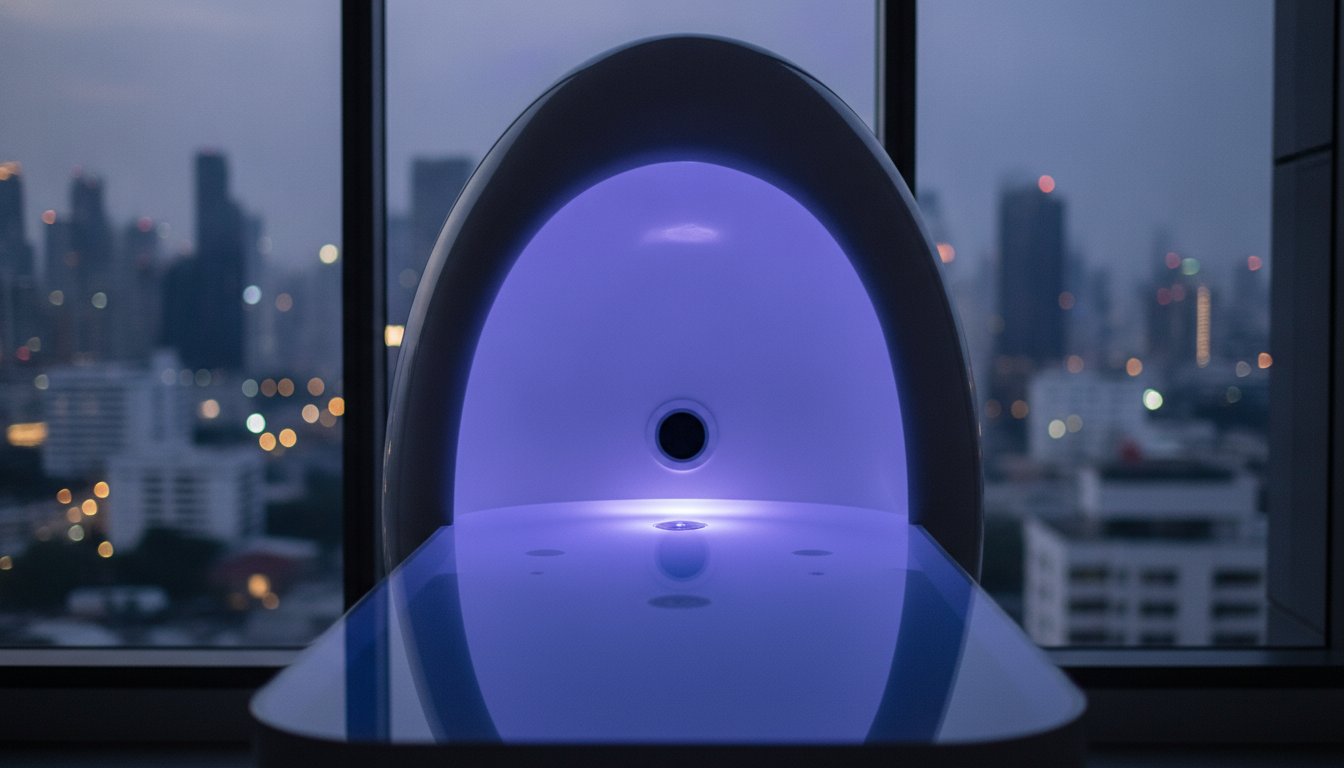
Imagine a space where the world's noise fades into a gentle hum of silence. Float therapy is more than just a spa treatment; it's a sensory-controlled environment designed to suspend you in high-density Epsom salt water. To understand what is an isolation tank, you have to look at the principle of Restricted Environmental Stimulation Therapy (REST). By removing light and sound, your brain enters a deep meditative state. For those seeking float therapy for back pain Bangkok provides a unique opportunity to experience "clinical weightlessness." This state allows your heart rate to slow and your blood pressure to stabilize as your body realizes it no longer needs to fight the earth's pull. It's a specialized tool for recovery that is rapidly becoming a preferred choice for those who find traditional methods insufficient for their chronic discomfort.
The Problem with Gravity and Spinal Loading
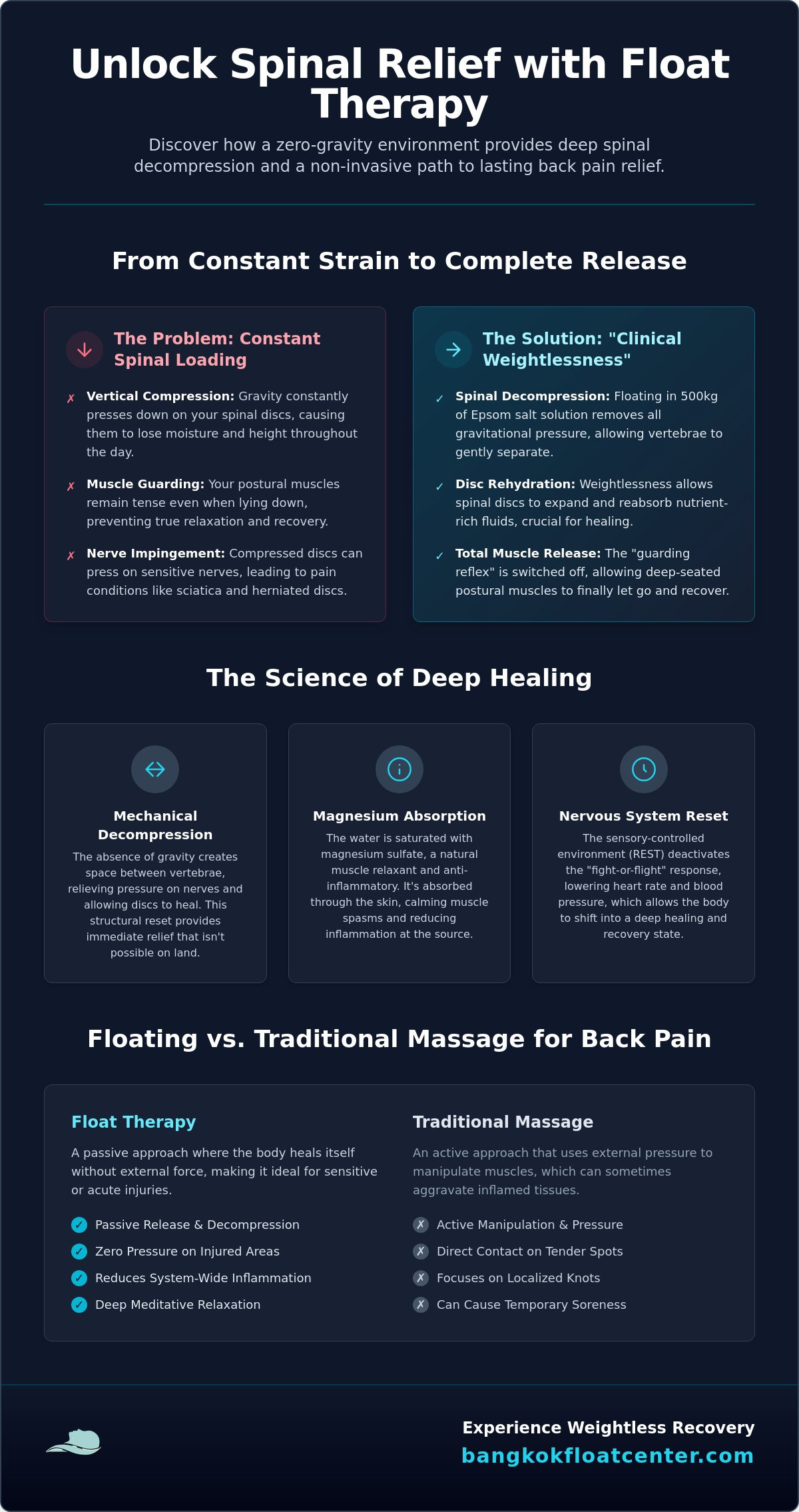
Every minute you spend upright, gravity is quietly working against you. Sitting at a desk or standing on concrete creates a constant compressive force on your spinal discs. These discs act as shock absorbers, but under a persistent vertical load, they begin to lose moisture and height. This pressure can compound existing injuries, making conditions like herniated discs or sciatica feel significantly worse. Even when you lie down in a standard bed, your body remains under some degree of tension. The mattress still pushes back against your pressure points, meaning your muscles never truly reach a state of total decompression. Your spine stays slightly curved, and your postural muscles stay "on" to maintain balance, even in sleep.
Zero-Gravity: A Sanctuary for the Spine
This is where the physics of buoyancy changes everything. In a float tank, we use approximately 500kg of medical-grade Epsom salt dissolved in skin-temperature water. This creates a solution so dense that you float effortlessly on the surface, regardless of your body type. This weightless therapy Bangkok experience effectively turns off the "guarding reflex." This reflex is your body's natural tendency to tighten muscles around a painful area to protect it. When you're floating, your brain finally receives the signal that it's safe to let go. As these muscles relax, your vertebrae can gently drift apart, creating the space needed for nerves to decompress. This isn't just relaxation; it's a structural reset that provides the spine with the first true break it has had since you were a child.
Benefits of achieving this zero-gravity state include:
- Immediate reduction in joint and disc pressure.
- Deactivation of the fight-or-flight nervous system response.
- Enhanced circulation to damaged or oxygen-starved spinal tissues.
- A complete release of the postural muscles that never rest on land.
The Science of Spinal Decompression and Magnesium Absorption
While the sensation of floating feels like magic, the relief you feel is rooted in precise biological shifts. During a 60 or 90-minute session, your body undergoes a process of renewal that isn't possible in any other environment. When you choose float therapy for back pain Bangkok, you're giving your body the quiet space it needs to trigger its own healing mechanisms. This involves a combination of mechanical decompression and chemical absorption that targets the very root of your discomfort.
Decompressing the Intervertebral Discs
Your spinal discs are essentially hydraulic shock absorbers. Under the weight of gravity, they gradually compress and lose moisture throughout the day. In the weightless environment of the tank, this pressure vanishes. This absence of load allows your discs to expand and reabsorb nutrient-rich fluids from the surrounding tissues. This rehydration is vital for those suffering from nerve impingement or sciatica, as even a few millimeters of expansion can significantly reduce the pressure on sensitive nerves. Research into Floatation Therapy for Physical Conditions suggests that this structural relief is a primary reason for the immediate reduction in chronic pain reported by many participants. To maintain these structural benefits, regular sessions help the spine stay resilient against the daily grind of city life.
Magnesium: The Natural Muscle Relaxant
The water in our sanctuary is saturated with high concentrations of magnesium sulfate, also known as Epsom salt. This mineral is a powerhouse for muscle recovery. Unlike oral supplements that must pass through the digestive system, magnesium is absorbed transdermally during your float, reaching inflamed muscles directly. Magnesium ions interact with calcium to relax muscle fibers by preventing the signals that cause persistent, painful contractions. This chemical interaction is what allows your "muscle guarding" reflexes to finally dissolve. As the magnesium enters your system, it helps regulate muscle spasms and reduces the systemic inflammation that often accompanies chronic back issues. If you're ready to experience this deep cellular release, you might find that a 60-minute float is the perfect starting point for your recovery journey.
Beyond the physical shifts, your brain plays a crucial role in your recovery. As you drift into a state of deep stillness, your brain begins to release endorphins. These are your body's natural pain-relieving chemicals, which act as a soothing balm for both physical and mental fatigue. This release breaks the "pain loop," where mental stress causes muscle tension, which then causes more pain. By quieting the mind, you effectively unlock the body, creating a holistic path to serenity and relief.
Floating vs. Traditional Massage: Which is Better for Back Pain?
When discomfort strikes, the instinct for many is to seek out a therapist who can work the knots out of their muscles. It's a natural choice in a city known for its healing traditions. However, for those exploring float therapy for back pain Bangkok, the experience offers a fundamental shift from active manipulation to passive release. While massage involves a practitioner applying external force to your tissues, floating allows your body to do the work from the inside out. It's the difference between being "fixed" by someone else and providing your body with the perfect environment to fix itself. This distinction is crucial for those dealing with structural issues where the body's own defense mechanisms might actually hinder traditional massage therapy.
The Limits of Manual Therapy
Traditional massage relies on the therapist’s ability to reach specific tension points. However, when your back is in acute pain, your body often enters a state of "muscle guarding." This is a defensive reflex where muscles tighten around a painful area to prevent further injury. If a therapist applies deep pressure to these guarded spots, your nervous system may perceive it as a threat, causing your muscles to lock up even tighter. This can make a massage session feel like a battle rather than a release. Furthermore, reaching deep postural muscles through manual touch is physically difficult. Floating provides a 360-degree support system that no massage table can match. Because the water holds you with uniform pressure, there's no "push back" from a hard surface, allowing even the deepest layers of tissue to soften without fear of pain.
Why Weightlessness Wins for Chronic Issues
Chronic pain is often a cycle of physical tension and mental fatigue. Total stillness is the key to breaking this loop. In the tank, the absence of touch and external stimuli allows your central nervous system to enter a state of deep rest. This lowers your "pain threshold," meaning your brain becomes less reactive to the signals of discomfort. Many individuals use float tank therapy Bangkok as a vital precursor to other treatments. By calming the nervous system and reducing systemic inflammation first, other therapies like physiotherapy or chiropractic adjustments often become more effective. The water is your therapist; it doesn't force change, it simply removes the obstacles of gravity and sensory input so your spine can return to its natural, balanced alignment. This total sensory deprivation ensures that your brain isn't distracted by the world outside, focusing all its energy on internal recovery and renewal.
A Practical Guide: Maximizing Back Relief During Your Session
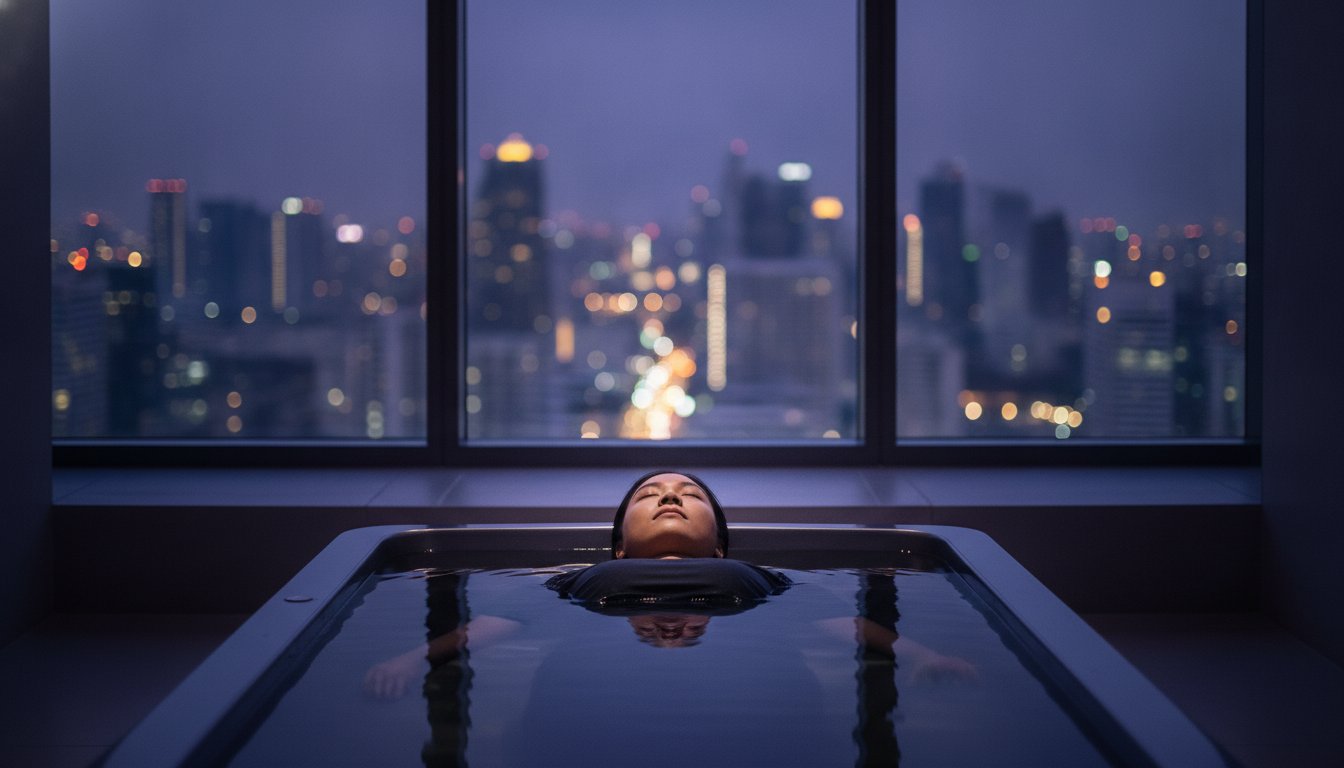
Entering the sanctuary of a float tank is the first step toward reclaiming your physical comfort. If you're managing limited mobility or acute discomfort, we suggest a slow, methodical approach. Start by sitting on the edge of the tank and gently pivoting your legs into the warm, salted water. Use the internal grab bars to lower your torso gradually until the buoyancy takes hold. Once you're adrift, the priority is finding a neutral spine position. This involves letting your head tilt back naturally until your ears are submerged, allowing the spine to settle into its most effortless alignment. For those seeking float therapy for back pain Bangkok offers a controlled environment where you can finally stop fighting your own weight.
Finding Your Optimal Float Position
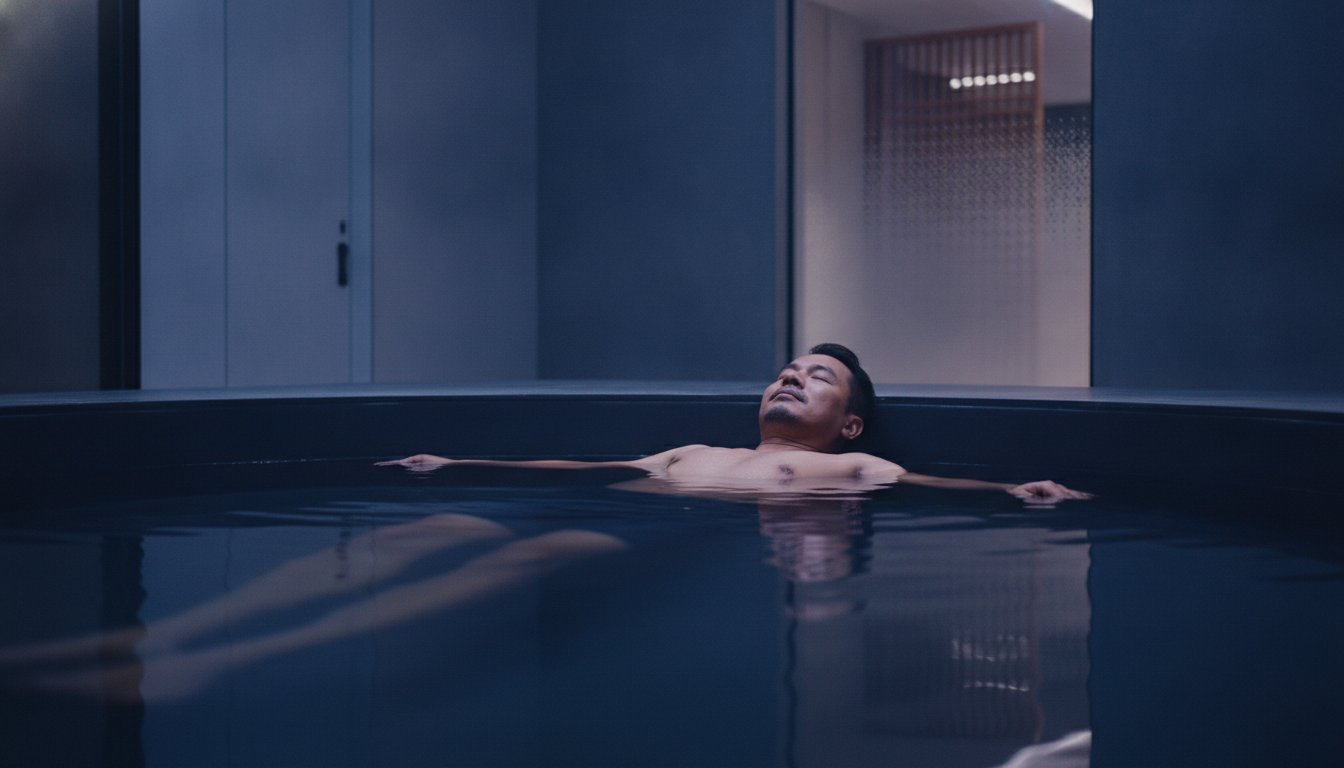
Your arm placement significantly changes how the water supports your skeletal structure. If you carry tension in your upper back or between your shoulder blades, try the "Cactus" position. Place your arms out to the sides with elbows bent at 90 degrees and palms facing upward. This opens the chest and allows the thoracic spine to flatten against the water. For lumbar or lower back issues, keeping your arms straight at your sides often provides the most effective decompression. If you feel a "pain flare" during the first 15 minutes, stay calm. This is the paradox of awareness; as the world goes quiet, your brain briefly focuses more on the pain before the nervous system finally decides to power down. You can also use a foam "halo" or neck support to provide extra lift for the cervical spine, ensuring your neck remains in a blissful, tension-free state.
Preparation and Post-Float Care
To get the most out of your recovery, come prepared with a relaxed mindset. Knowing what to wear in a float tank is essential for your comfort, though most prefer floating without clothing to remove all tactile distractions. After your session, your muscles will be in a highly relaxed state. This is the perfect time for hydration and very light, mindful stretching to help maintain the mobility you've just regained. While many enjoy the quick reset of an hour, a 90-minute float is often superior for deep-seated chronic pain. This extended time allows the body to move past the initial relaxation phase and into a deeper state of structural rehydration and cellular repair. It's not just a break from the day; it's a dedicated window for your body to return to its natural, balanced state of being.
Experience Weightless Recovery at Bangkok Float Center
Stepping into our sanctuary is the first step toward a life unburdened by physical strain. We've crafted a professional environment specifically for deep renewal, where the chaos of the city is replaced by total stillness. When you seek float therapy for back pain Bangkok, you're not just booking a session; you're entering a space dedicated to your recovery. Every detail, from the ambient lighting to the silent corridors, is designed to help your nervous system power down. We take pride in our rigorous sanitation protocols, utilizing advanced filtration systems and UV light treatments between every guest. This ensures that your focus remains entirely on your healing, knowing you're in a pristine, safe environment.
Tailored Sessions for Every Body
We understand that every back injury is unique, which is why we offer both 60 and 90-minute options. For those with mild tension or looking for a quick reset, the hour-long session is a perfect introduction. However, if you're managing chronic, deep-seated pain, the 90-minute float allows your body that extra window needed for total structural release. If you wish to share this path to relief, a couple float session Bangkok provides a beautiful opportunity for partners to experience weightless connection and shared stillness. It's a sanctuary from the noise and pressure of daily life, allowing both individuals to emerge feeling lighter and more aligned.
Your Journey to Stillness Begins Here
Booking your first visit is a simple, welcoming process. When you arrive, our team will guide you through the experience, ensuring you feel comfortable and prepared before you ever touch the water. While a single float provides immediate physical ease, the most profound changes often happen through consistency. Integrating floating into your monthly wellness routine helps prevent the "muscle guarding" reflexes we've discussed from returning. It's an investment in your long-term mobility and mental clarity. We invite you to finally let go of the vertical load you've been carrying. Step into the water, leave the world behind, and let the science of weightlessness do the work for you.
Your Path to a Lighter, Pain-Free Life
The journey toward physical recovery doesn't have to be a struggle against your own body. By stepping into a gravity-free environment, you allow your spine to decompress and your muscles to finally release their defensive grip. We have explored how the combination of transdermal magnesium absorption and the quiet stillness of the tank can break the cycle of chronic discomfort. Whether you choose a specialized 60 or 90-minute session, the goal is the same: to provide your body with the sanctuary it needs to heal from within.
Our professional zero-gravity tanks offer a pristine, private environment where total relaxation isn't just a goal; it's a physiological certainty. Finding relief through float therapy for back pain Bangkok means choosing a non-invasive, restorative path that respects your body's natural need for rest. It is time to leave the noise of the city behind and discover what it feels like to be truly weightless. Book your weightless recovery session at Bangkok Float Center today and take the first step toward lasting serenity and physical renewal. We are ready to welcome you into the quiet.
Frequently Asked Questions
Is float therapy safe if I have a herniated disc or severe back pain?
Float therapy is safe and often highly recommended for herniated discs because it eliminates the gravity that compresses the spine. By removing this pressure, the discs can begin to rehydrate and move away from sensitive nerves. However, if you're in the middle of an acute flare-up or have just had surgery, it's always best to consult your physician first. They can ensure you're ready for the gentle movement required to enter the tank.
How many sessions do I need before my back pain starts to improve?
Most people experience a significant sense of relief after their very first 60 or 90-minute session. For chronic issues, we typically suggest a series of three to five sessions spaced closely together. This allows your body to "unlearn" its habitual muscle guarding patterns. When pursuing float therapy for back pain Bangkok guests often find that regular monthly maintenance helps keep the spine decompressed and prevents future tension from building up.
Will I be able to get out of the tank easily if my back is stiff?
Yes, our tanks are designed with accessibility in mind, featuring sturdy internal grab bars to assist your movement. The water is incredibly buoyant, so your body feels light and easy to maneuver as you transition from lying down to sitting. Our staff is also available to explain the most ergonomic way to enter and exit. This ensures you feel supported and safe throughout your entire journey to stillness.
Can I float if I am pregnant and experiencing lower back pain?
Floating is a wonderful sanctuary for expectant mothers, especially during the second and third trimesters when lower back strain is common. The weightlessness provides immediate relief from the extra load on your joints and spine. It's often called the "mirror effect," where the baby floats in the womb while you float in the tank. We do recommend checking with your healthcare provider before your first visit to ensure it's right for you.
What is the best position in the float tank for lower back relief?
The most effective position for lower back relief is usually floating with your arms flat at your sides. This allows your lumbar spine to settle into its most natural, neutral curve. If you feel any strain in your neck while doing this, you can use one of our foam halos for extra support. Some guests also find relief by crossing their arms over their chest, which can further flatten the lower back against the water.
Is floating better than a traditional Thai massage for back issues?
Floating and Thai massage serve different purposes in your recovery. While massage uses active manipulation to work on surface muscles, float therapy for back pain Bangkok focuses on passive structural release. Floating is often superior for those with sensitive injuries because there's no risk of a therapist triggering a defensive "guarding" reflex. It allows your nervous system to reset in total silence, providing a deeper level of decompression than a massage table can offer.
What should I do if my back feels 'louder' or more painful during the float?
It's common to experience a temporary increase in "pain awareness" during the first few minutes of a float. Without external distractions, your brain may focus more intensely on existing discomfort. This usually passes as your muscles begin to relax and the magnesium takes effect. If the sensation persists, try gently shifting your arm position or using a neck support. Most find that the pain "dissolves" as they settle into deeper relaxation.
How does the magnesium in the salt help with back inflammation?
The high concentration of magnesium sulfate in the water is absorbed directly through your skin, bypassing the digestive system for immediate effect. Magnesium is a natural calcium blocker, which helps your muscle fibers relax and prevents the spasms that cause inflammation. This chemical process works alongside the physical weightlessness to quiet the nervous system. It reduces systemic swelling and promotes faster tissue repair in the areas where you carry the most tension.