That hour on the massage table might be your go-to for relief, but what if the deepest source of your tension isn't actually in your muscles? We've all felt the heavy weight of the constant hum of modern life, where its vibrant energy eventually turns into a persistent mental fatigue that a standard rubdown just can't touch. You might leave the spa with looser shoulders, yet your mind remains tethered to the noise of the external world.
It's a common struggle for those seeking true sanctuary in today's demanding world. To help you choose the right path, we're diving into the physiological and mental differences between sensory deprivation and traditional bodywork. You'll discover how to achieve a total mental reset and a profound sense of physical weightlessness. By comparing float therapy vs massage Bangkok, we'll guide you toward the long-lasting stress reduction your body and mind are calling for. We'll look at how each method addresses chronic fatigue and which one offers the stillness you need to finally drift away from the chaos.
Key Takeaways
- Understand the fundamental shift from the tactile pressure of a traditional massage to the profound, weightless stillness of sensory deprivation.
- Explore how removing the "gravity tax" through floating allows your joints and spine to decompress in a way that physical manipulation cannot always achieve.
- Evaluate the specific benefits of float therapy vs massage Bangkok to find the right balance between immediate muscle relief and total mental clarity.
- Learn how both practices interact with your nervous system to trigger a restorative state of peace and long-lasting stress reduction.
- Gain the confidence to explore new states of being with practical advice on addressing common first-timer concerns like claustrophobia.
Understanding the Core Differences: Float Therapy vs Massage in Bangkok
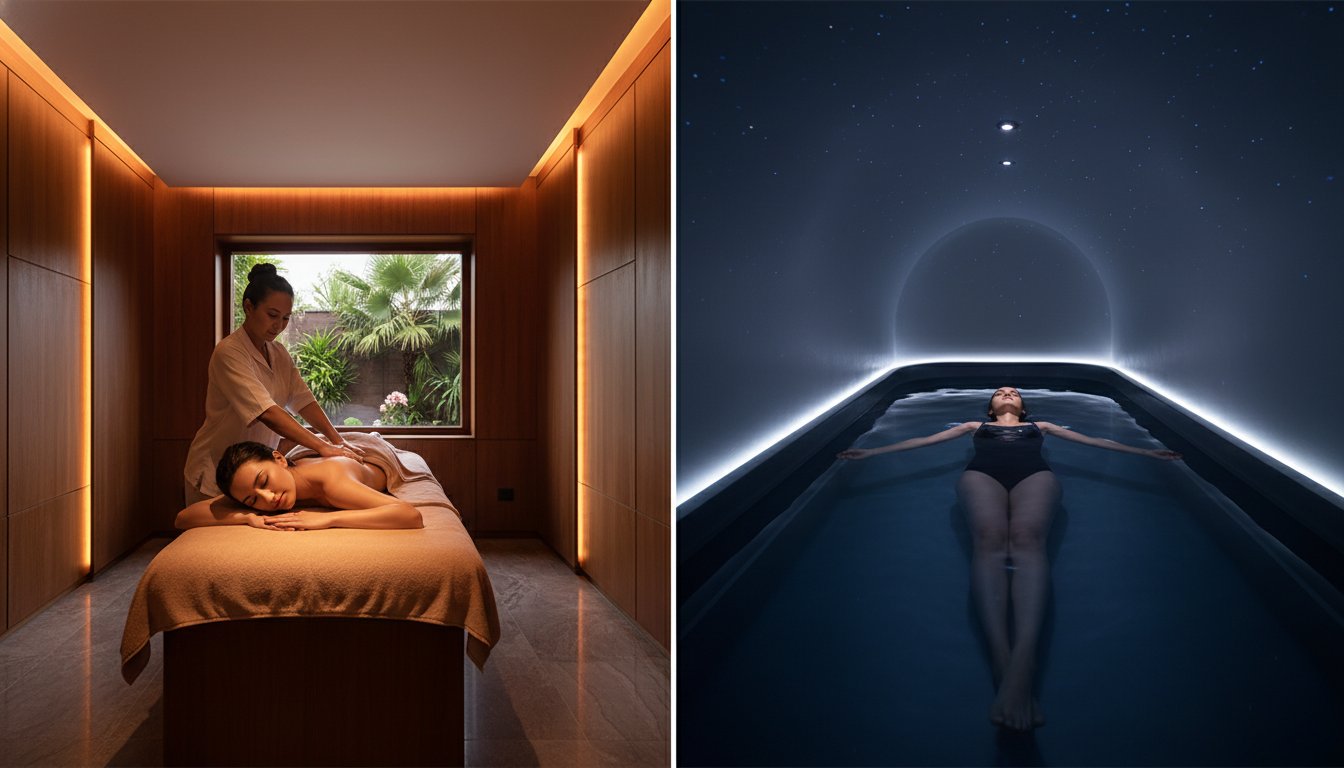
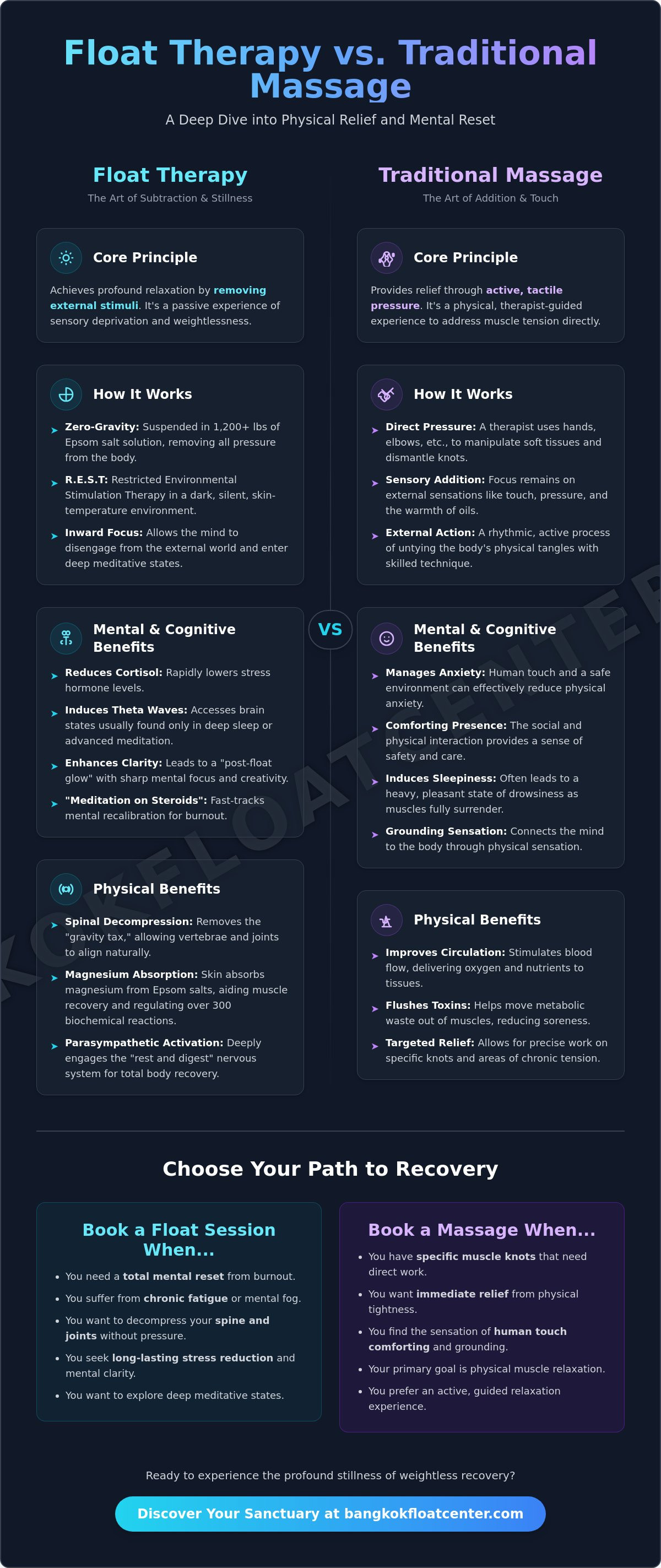
Bangkok is a city of high energy and deep tradition, making it the perfect place to explore different paths to wellness. When you're deciding between float therapy vs massage Bangkok, it's helpful to look at how each method approaches relaxation. A massage is an active, tactile experience where a therapist works on your soft tissues to provide relief. Floating, however, is a practice of profound stillness. You're suspended in a high-concentration Epsom salt solution that makes you feel weightless. This "Zero-Gravity" state is the primary differentiator. While a massage keeps your focus on the external world through touch, floating shifts your attention inward, away from any sensory input.
The Mechanism of Physical Touch
Traditional bodywork relies on the direct application of pressure to improve circulation and dismantle muscle knots. A therapist uses their hands, elbows, or even feet to find the specific spots where you carry your stress. This physical interaction stimulates blood flow and helps flush out metabolic waste from your tissues. There is also a comforting human element to massage. For many, the presence of a skilled professional provides a sense of safety and care. It's a social and physical experience that addresses the body's needs through targeted, external action. It's a rhythmic process of untying the body's physical tangles.
The Mechanism of Sensory Deprivation
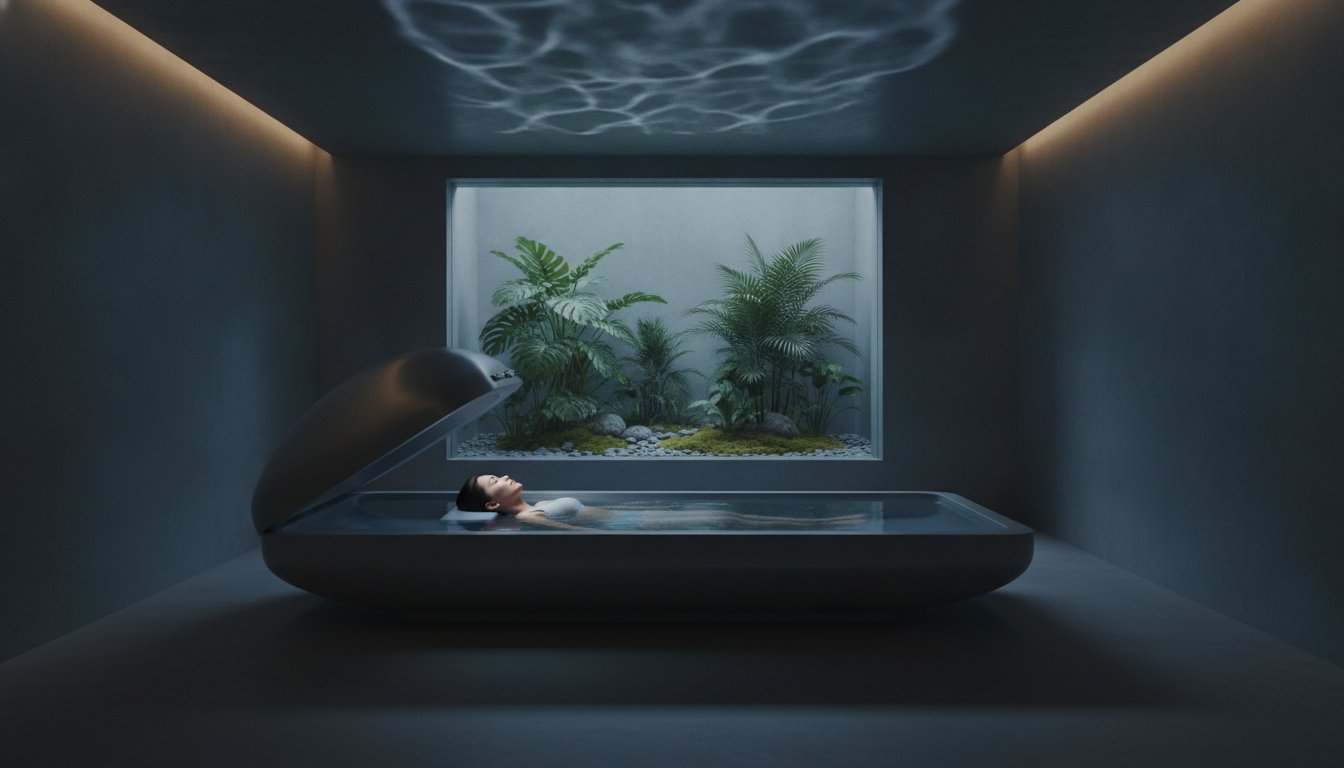
Floating takes the opposite approach by removing almost all physical stimuli. This is technically called Restricted Environmental Stimulation Therapy, or R.E.S.T. If you've ever wondered what is an isolation tank, it's a sanctuary designed to let your nervous system power down completely. You're enveloped in skin-temperature water and total silence. Gravity fades away. In this dark, quiet space, the lack of pressure points allows your spine and joints to decompress naturally. You aren't being pushed or pulled; you're simply letting go. This environment creates a unique state of passive recovery. It's a mental and physical reset that happens because the world has finally stopped asking anything of you.
The Science of Stillness: How Sensory Deprivation Compares to Physical Therapy
While a therapist’s hands work to knead away tension, the float tank works by doing nothing at all. This is the "sensory gap" that defines the choice between float therapy vs massage Bangkok. In a massage, your brain is processing the warmth of the oil, the pressure of a thumb, and the rhythmic movement of the practitioner. These are all positive sensory additions. Floating, conversely, is the art of subtraction. By removing light, sound, and the constant pull of gravity, you allow your brain to stop processing the external world entirely. It's a shift from active stimulation to the ultimate form of passive recovery.
Both practices successfully engage the parasympathetic nervous system, which is the body's "rest and digest" mode. Research on the benefits of massage therapy shows it's highly effective for lowering heart rates and managing physical anxiety. However, floating offers a different physiological path. Because there is no touch to respond to, the mind drifts into deeper states of stillness. This often results in a "post-float glow" characterized by sharp mental clarity and a feeling of being light as air. In contrast, a massage frequently leads to a heavy, pleasant sleepiness as your muscles surrender to the physical work performed on them.
Cortisol Reduction and Stress Response
When you're in the tank, your body's stress response system finally gets a break. Cortisol levels drop rapidly as your brain enters the Alpha and Theta wave states. Theta waves are typically only reached in deep sleep or after years of dedicated meditation practice. This is why many enthusiasts call floating "meditation on steroids." It fast-tracks you into a dreamlike state of consciousness that's incredibly restorative for those facing severe burnout. It's not just rest; it's a total recalibration of your mental frequency.
The Role of Magnesium and Epsom Salts
The physical benefits of the tank are grounded in mineral science. Our Dream Pods contain over 1,200 pounds of Epsom salt, creating a solution far more concentrated than the Dead Sea. This isn't just for buoyancy. Your skin absorbs the magnesium from the water, which helps regulate over 300 biochemical reactions in the body. While traditional massages use topical oils to reduce friction, the magnesium in a float tank actively aids in muscle recovery and improves sleep quality long after you've left. If you're ready to feel this weightless renewal, you can explore our float sessions to begin your journey into stillness.
Comparing the Physical and Mental Benefits
Choosing between float therapy vs massage Bangkok often comes down to what your body and mind need most in this moment. While both practices aim for relaxation, they offer different frameworks for recovery. A massage provides immediate physical relief by addressing the localized tension you can feel with your hands. Floating, however, offers a systemic reset. It addresses the "gravity tax," which is the significant portion of your brain's energy spent simply calculating your position in space and fighting the Earth's constant pull. By eliminating this tax, floating allows your body to redirect that energy toward internal healing and deep cellular repair.
The duration of these effects also varies. The physical looseness from a massage is wonderful, yet it can sometimes fade as you step back into the frantic pace of the city. Because floating works on the central nervous system, the mental clarity and "post-float glow" often persist for several days. It's a profound experience of nothingness that feels increasingly rare in our hyper-connected world. In a city that never stops talking, the silence of the tank becomes a powerful tool for long-term stress management.
Physical Pain and Injury Recovery
Massage therapy is often the superior choice for localized issues. If you have a specific knot under your shoulder blade or need to improve flexibility in your hamstrings, the proactive touch of a therapist is invaluable. However, for chronic back issues, joint pain, or total body inflammation, floating offers a unique advantage. Without any pressure points, your spine can decompress fully. Many athletes in Thailand now use a combination of both; they use massage for muscle maintenance and floating for systemic recovery and joint health. This synergy ensures that both the soft tissues and the skeletal structure receive the care they need.
Mental Health and Cognitive Performance
While a massage is relaxing, floating is a deep dive into the subconscious. The transition into the Theta state allows for creative problem-solving and a mental "defrosting" that is difficult to achieve elsewhere. For those living with anxiety or ADHD, the absence of sensory input provides a rare opportunity for the mind to find its own rhythm without being interrupted by external noise. It's more than just a break; it's a cognitive recalibration. While massage helps you feel better in your skin, floating helps you feel better in your mind, offering a level of stillness that traditional meditation often takes years to master.
Choosing Your Path: When to Book a Float and When to Book a Massage
Deciding on float therapy vs massage Bangkok depends on the nature of the burden you're carrying. If your shoulders are tight from a long day at the office, a massage offers that immediate, satisfying release. However, if you feel like your brain has too many tabs open and the city's noise has become overwhelming, the silence of a float tank is often the more effective remedy. Think of massage as a way to fix the body's hardware, while floating is a way to reboot the mind's software.
To help you choose, consider this simple checklist. You should lean toward a massage if you have a specific muscle knot that needs kneading or if you find the presence of a therapist comforting. You should choose a float session if you're experiencing mental burnout, chronic joint pain, or if you simply need to disappear from the world for an hour. Most people find that a 60-minute session is a perfect introduction, while a 90-minute session allows for a much deeper dive into the meditative Theta state.
Scenario-Based Recommendations
- The Jet Lag Cure: After a long flight into Suvarnabhumi, your internal clock is shattered. Floating is the ultimate tool for jet lag recovery because it resets your circadian rhythm and reduces the swelling in your joints caused by cabin pressure.
- The Creative Block: For high-intensity office workers, a 90-minute float acts as a mental defragmentation. It clears the clutter and allows for the kind of "aha!" moments that rarely happen in a cubicle.
- The Shared Sanctuary: If you're looking for a unique way to bond, consider a couple's float. It's a peaceful alternative to a standard spa day, allowing you both to experience weightlessness in the same space.
Overcoming Common Hesitations
It's natural to feel a bit of "first-timer anxiety," especially regarding the idea of a closed tank. It's helpful to know that our Dream Pods are incredibly spacious and designed to feel like a private sanctuary rather than a confined box. You're always in control of the light and the lid. Regarding hygiene, the high salt concentration acts as a natural disinfectant, and our water is filtered multiple times between every guest, ensuring a standard of cleanliness that far exceeds a typical massage table.
A helpful tip for your first time is to embrace the "20-minute transition." It usually takes about twenty minutes for your brain to stop looking for distractions and finally settle into the stillness. Once you pass that threshold, the true relaxation begins. If you're ready to experience this deep state of zen, you can view our float session options to find the right fit for your schedule. For long-term wellness, many of our guests find that floating once a week helps them maintain a consistent sense of mental clarity and physical ease.
The Bangkok Float Center Experience: Your Sanctuary for Weightless Recovery
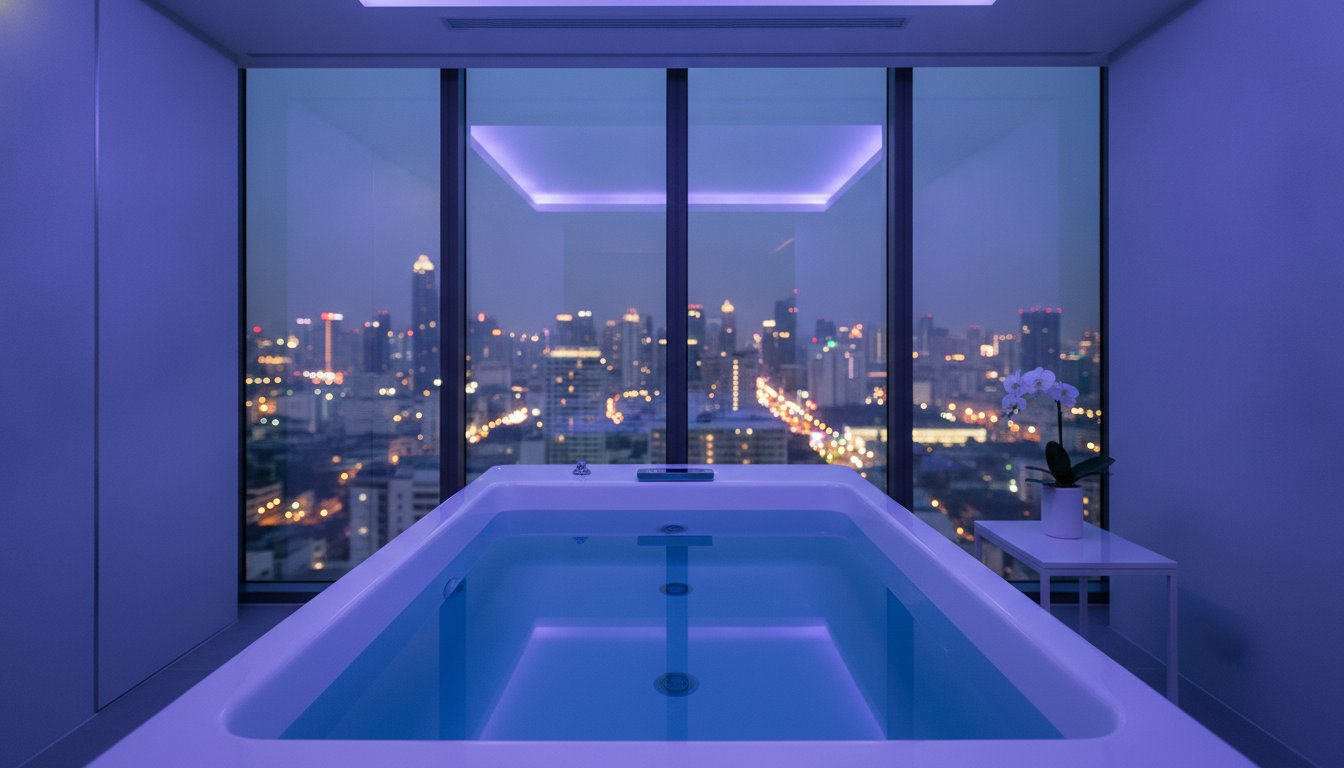
The moment you step inside our center, the frantic pace of the city begins to dissolve. We've designed this space to be a true sanctuary, a place where the external world can't reach you. Unlike traditional spas where the environment can still feel busy, our focus is entirely on the specialized practice of floating. By choosing float therapy vs massage Bangkok, you're opting for a dedicated environment of stillness. We utilize state-of-the-art Dream Pod technology, which provides a spacious and futuristic vessel for your journey into weightlessness. Our team acts as your Zen Guides, ensuring you feel supported and safe as you explore this unique state of being.
Our facility is a specialized hub for recovery, moving beyond the general offerings of a standard spa. We focus on the science of sensory deprivation to ensure that every element, from the water temperature to the acoustic insulation, is optimized for your rest. You aren't just booking a session; you're entering a carefully controlled environment designed to facilitate a total mental and physical reset. This professional expertise allows us to guide you through the transition from the high-energy streets of Bangkok to a state of profound, internal quiet.
Tailored Sessions for Every Need
We offer various session lengths to match your personal goals and experience level. For those seeking a quick mental clearing or a break from a hectic workday, our 60-minute float for ฿1,700 is an ideal choice. It's enough time to quiet the mind and find physical relief. If you're looking for a deeper dive into the subconscious, the 90-minute deep float at ฿1,950 is highly recommended. This longer duration is perfect for experienced floaters who want to maximize their time in the Theta state. We also provide shared serenity through our couple sessions, starting from ฿3,300 for 60 minutes or ฿3,900 for 90 minutes. These sessions allow you to find peace alongside a partner in a shared, tranquil environment.
Your Journey to Stillness Starts Here
Your experience begins long before you enter the water. We welcome you with a calming tea and a gentle orientation to ensure you're comfortable with the technology and the process. Each guest enjoys a private spa suite, complete with its own shower and amenities, maintaining a sense of total seclusion. This is a pure float experience, free from the distractions of music or outside interference unless you choose otherwise. We're here to help you shed the burdens of daily life and rediscover your natural state of balance. When you're ready to leave the noise behind and find your perfect state of zen, we invite you to Book your weightless journey at Bangkok Float Center. Your path to total recovery is waiting.
Embrace the Silence and Find Your Balance
The path to true relaxation is rarely a single road. While a traditional massage offers a vital touch to release physical knots, the float tank provides a unique mental sanctuary that the busy streets of Bangkok cannot touch. Choosing between float therapy vs massage Bangkok is ultimately a decision between external care and internal discovery. One heals through pressure; the other heals through the complete absence of it. By removing the constant weight of gravity, you allow your nervous system to enter a state of recovery that is both deep and lasting.
At Bangkok Float Center, we've created a dedicated space for this weightless journey. With over 750 5-star reviews on Tripadvisor and state-of-the-art Dream Pod technology, we provide the professional expertise needed to guide you into stillness. Every guest enjoys a private spa suite, ensuring your transition into the Theta state is uninterrupted and serene. It's time to let the noise of the world fade away and rediscover your sense of wonder.
Experience total weightlessness; Book your session today
We look forward to welcoming you into our sanctuary. Your most peaceful self is waiting just beneath the surface.
Frequently Asked Questions
Is float therapy more effective than a massage for stress?
Both therapies are highly effective but target stress through different mechanisms. While a massage uses physical touch to knead away muscle tension, float therapy addresses the root of mental fatigue by removing all external sensory input. This allows your brain to enter a deep state of stillness that a standard massage cannot replicate. Many guests find floating more effective for total nervous system resets and long-lasting mental clarity.
Can I do float therapy if I am claustrophobic?
Yes, you can absolutely enjoy floating even if you have concerns about confined spaces. Our Dream Pods are designed to be incredibly spacious and airy, feeling more like a private sanctuary than a small box. You're in complete control of the experience at all times. You can choose to leave the pod lid open and keep the internal lights on until you feel comfortable enough to drift into the darkness.
How much does a float session cost compared to a massage in Bangkok?
A traditional Thai massage in Bangkok typically ranges from ฿250 to ฿800 depending on the spa's level of luxury. In comparison, a 60-minute float session at our center is ฿1,700. This price reflects the specialized technology, the 1,200 pounds of Epsom salts required for buoyancy, and the private, highly controlled environment necessary to achieve a true state of sensory deprivation.
Should I shower before or after my float session?
You should shower both before and after your session for the best experience. A pre-float shower is essential to remove body oils, perfumes, and hair products, ensuring the water remains pure. After your float, you'll want to shower to rinse the high-concentration salt solution from your skin and hair. We provide private showers and premium amenities in every suite to make this process seamless and refreshing.
Is it okay to float if I have recently had a massage?
It's perfectly safe and often highly recommended to float after a massage. Floating helps prolong the physical benefits of a massage by removing the "gravity tax" on your muscles and joints. This synergy between float therapy vs massage Bangkok practices allows your body to remain in a relaxed state for much longer, helping the work done by your massage therapist settle in more deeply.
What is the difference between a 60-minute and 90-minute float?
The primary difference is the depth of the mental state you can reach during the session. A 60-minute float is an excellent reset for the body and a great introduction to weightlessness. A 90-minute session, however, provides the extra time needed for your brain to fully transition into the Theta wave state. This deeper level of stillness often leads to more profound creative insights and a more significant reduction in cortisol.
Will my skin prune like it does in a bathtub?
No, your skin will not prune or wrinkle during a float session. The high concentration of Epsom salt in the water prevents the process of osmosis that causes skin to prune in fresh water. Instead, the magnesium-rich solution acts as a natural skin softener. Most guests find that they emerge from the tank with skin that feels remarkably smooth, hydrated, and silky rather than wrinkled.
Can couples float together in the same tank?
Yes, we offer dedicated couple sessions designed for those who wish to share the experience of weightless serenity. You can book a 60-minute couple float for ฿3,300 or a 90-minute session for ฿3,900. It's a unique way to bond in a shared environment of total peace, allowing both of you to escape the city's noise while remaining in each other's calming presence.