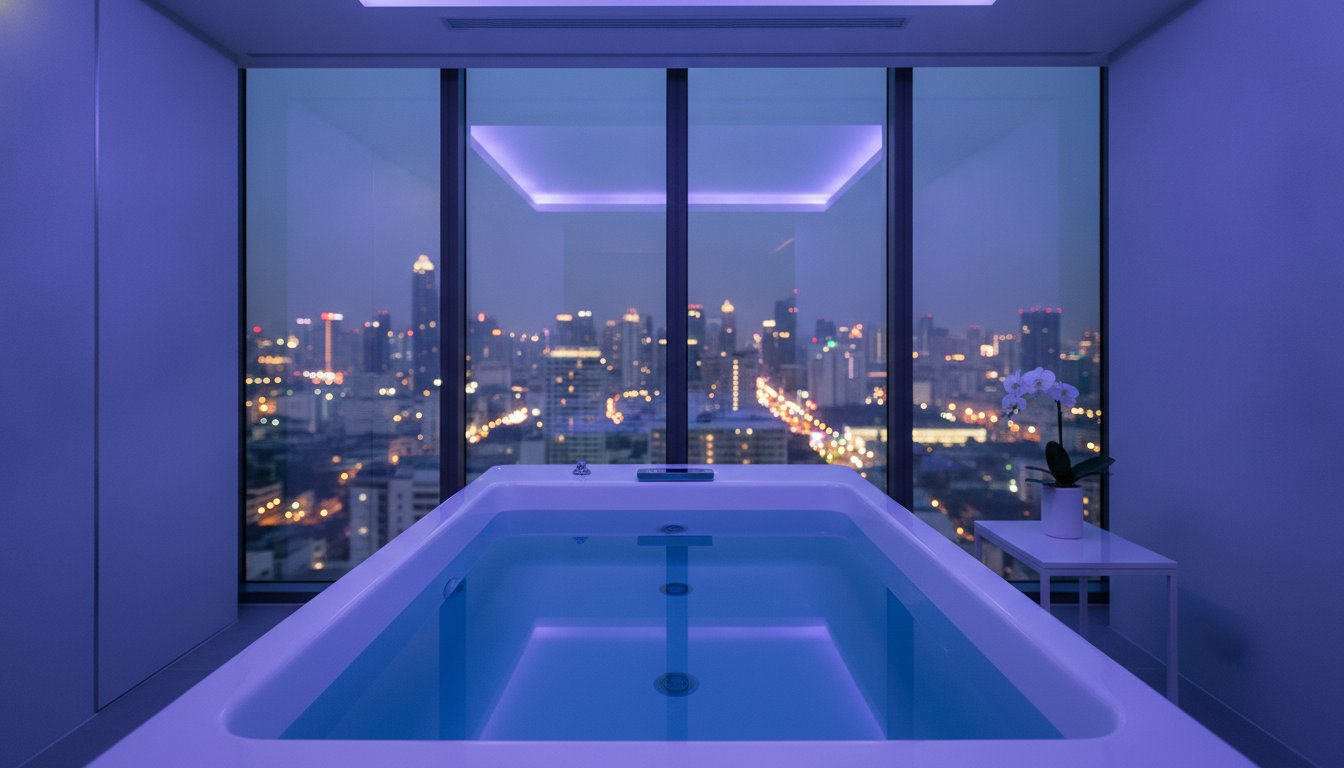
What if you could achieve the restorative power of four hours of deep sleep in just sixty minutes of total weightlessness? For many living in the fast-paced environment of Thailand, the night doesn't bring peace; it brings a racing mind and a body that refuses to let go of the day's tension. You've likely tried the herbal teas and the blackout curtains, yet you still wake up feeling like you haven't slept at all. Using a float tank for sleep offers a profound departure from the traditional struggle against insomnia, providing a sanctuary where the external world simply ceases to exist.
In this guide, you'll discover the biological and psychological mechanisms that allow sensory deprivation to act as a hard reset for your nervous system. We will explore how this unique experience reduces cortisol levels and quiets mental burnout by mimicking the deepest stages of rest. You'll learn how a single session can break the cycle of physical tension, allowing you to fall asleep faster and wake up feeling truly renewed. It's time to explore a natural path to serenity that doesn't rely on medication or complex routines, helping you reclaim the quiet rest your body deserves.
Key Takeaways
- Learn how Restricted Environmental Stimulation Therapy (REST) quiets the mind's constant search for external threats, allowing your nervous system to fully disarm.
- Explore the role of magnesium sulfate in regulating GABA, the key neurotransmitter responsible for calming the brain and preparing the body for rest.
- Discover why it is physically impossible to sink or turn over, making a float tank for sleep a safe and effective way to achieve several hours of deep recovery.
- Gain practical insights on the best time to float and how to integrate these sessions into a consistent sleep hygiene routine for lasting results.
The Silent Sanctuary: Why Float Tanks are the Ultimate Remedy for Sleep Deprivation
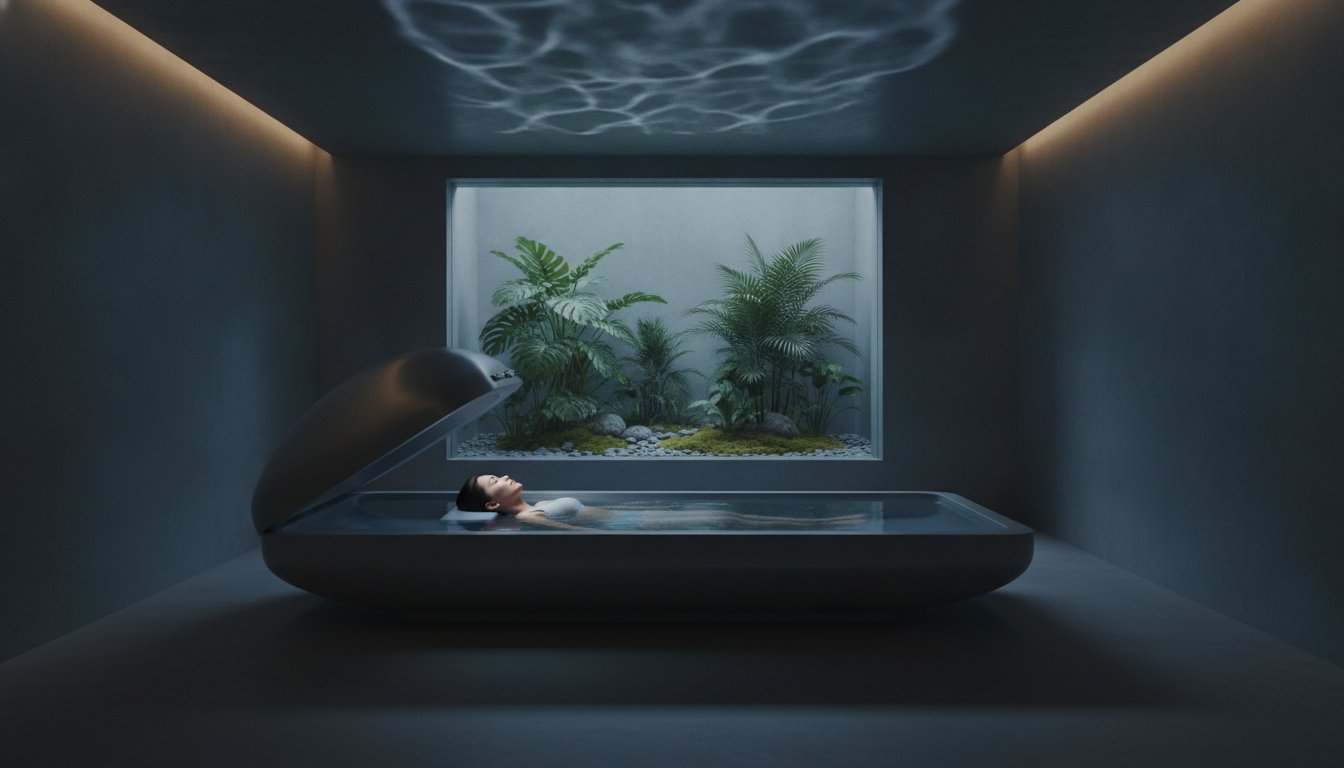
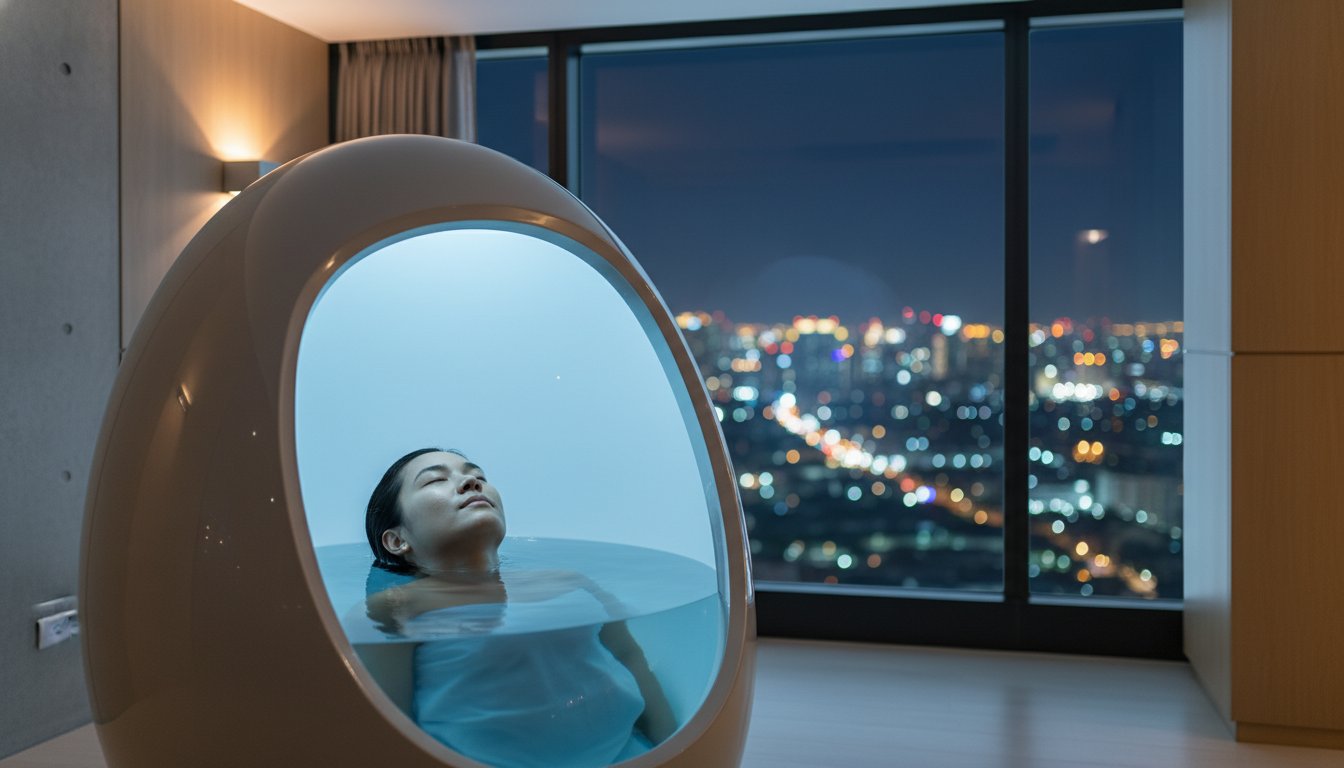
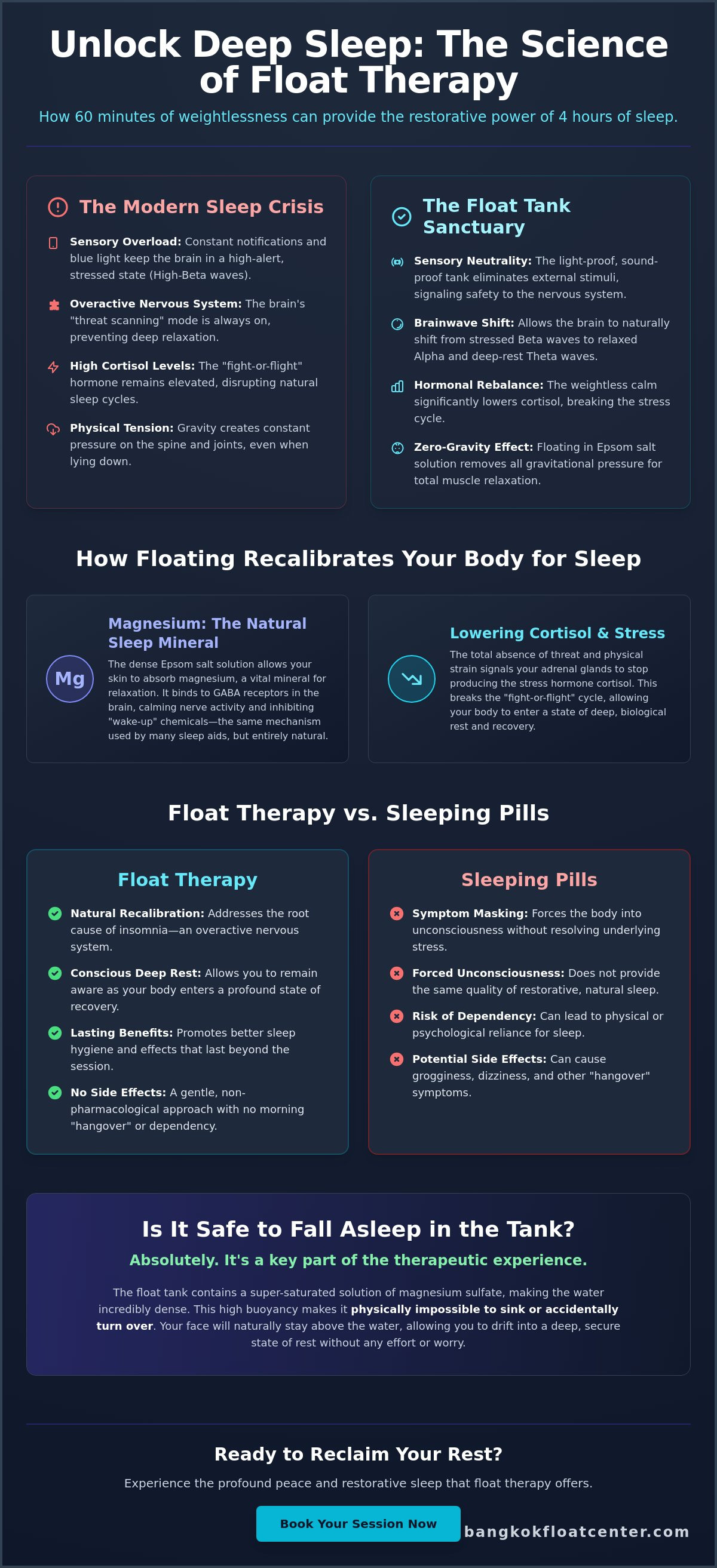
Float therapy is scientifically known as Restricted Environmental Stimulation Therapy (REST). It centers on the use of an Isolation tank; a private, light-proof, and sound-proof vessel filled with a warm, dense solution of magnesium sulfate. This unique environment is designed to eliminate almost all external sensory input. For those exploring a float tank for sleep, the primary benefit is the immediate cessation of the brain's "threat scanning" mode. Throughout our evolution, the human brain stayed alert to sudden sounds or movements to ensure survival. In the tank, the total absence of these inputs signals the nervous system that it's finally safe to disarm. This creates a state of biological rest where the body isn't just lying down; it's experiencing a complete lack of external burden.
The Modern Sleep Crisis and Sensory Overload
Daily life in a bustling modern city is often a storm of sensory input. Constant notifications and blue light from screens keep the brain locked in a high-beta frequency. This state is characterized by high alertness and stress, making it nearly impossible to transition into the alpha or theta waves required for deep sleep. Even the most advanced traditional mattresses can't provide total pressure-point relief because gravity is always pulling on your spine and joints. In the salt water, your body becomes entirely weightless. During the first 20 minutes of a session, you might feel your mind racing as it processes the sudden silence. This is the mental unloading phase. Once this transition is complete, the brain naturally descends into a state of profound stillness that a standard bedroom cannot replicate.
Sensory Deprivation vs. Traditional Sleep Aids
Many individuals rely on sleep medication or supplements to force their bodies into a state of unconsciousness. While these may offer temporary relief, they often lead to a morning "hangover" or physical dependency. Floating offers a gentle, non-pharmacological alternative that addresses the root cause of insomnia: an overactive nervous system. There's a vital difference between being "unconscious" from a pill and experiencing the "conscious" deep rest found in a tank. Choosing a float tank for sleep allows you to remain aware as your body enters a state of recovery so deep it can mimic several hours of REM sleep. It's a natural recalibration that lowers cortisol and invites your body back into its original, balanced rhythm without the need for external chemicals.
The Biological Mechanics: How Floating Recalibrates Your Internal Sleep Clock
While the silence of the tank provides immediate mental relief, the true biological transformation happens through your skin and your nervous system. Each session involves floating in a highly concentrated solution of magnesium sulfate, commonly known as Epsom salt. This isn't just about buoyancy. The high mineral content facilitates a unique environment for your body to absorb magnesium, a vital mineral that nearly half of the population lacks. When you use a float tank for sleep, you are essentially bathing your nervous system in a natural sedative that helps quiet the internal noise that keeps you awake at night.
Magnesium: The Natural Sleep Mineral
Magnesium deficiency is a leading contributor to chronic insomnia and restless leg syndrome. Inside the tank, the dense salt concentration allows for efficient mineral uptake, which directly impacts your brain chemistry. Magnesium regulates neurotransmitters by binding to GABA receptors, the same receptors targeted by many sleep medications to reduce nerve activity. This mineral effectively inhibits the "wake-up" chemicals in your brain, signaling to your entire system that the day is over. By restoring these mineral levels, you can experience a deeper, more stable sleep cycle that lasts long after you leave the water. If you feel your body is constantly "on," a visit to the Bangkok Float Center can provide the mineral-rich environment needed to finally switch off.
Lowering Cortisol and the Fight-or-Flight Response
Cortisol is the primary hormone responsible for the "fight-or-flight" response, and elevated levels are a direct enemy of deep rest. In a randomized controlled pilot trial, researchers found that float therapy significantly reduced stress and improved sleep quality by lowering these hormonal triggers. The weightless environment tells your adrenal glands to stop the production of stress hormones almost immediately. This creates a powerful "rebound effect." As cortisol levels drop, your body's natural production of melatonin increases, making it much easier to fall into a restorative slumber later that evening.
Beyond hormones, your brainwaves undergo a dramatic shift during a 60-minute session. Most of our waking hours are spent in Beta waves, characterized by high-frequency activity and alertness. As you settle into the stillness of a float tank for sleep, your brain moves through Alpha waves into the elusive Theta state. Theta waves are typically only accessible during the moments just before you fall asleep or during deep meditation. By spending time in this restorative frequency, you give your brain a "hard reset" that clears mental burnout and prepares your mind for a night of uninterrupted, high-quality rest. Regular sessions help lower your baseline stress levels, making you more resilient to the pressures of daily life in Thailand.
Safety and Experience: What Happens if You Fall Asleep During Your Session?
One of the most frequent questions first-time visitors ask is whether it's truly safe to drift off while floating. It's a natural concern. However, falling asleep in a float tank for sleep is not only safe; it's often the ultimate goal for those battling chronic exhaustion. Unlike a traditional mattress, the water provides a completely supportive environment that removes the need for your body to adjust its position. You aren't just lying on a surface; you're held in a state of total suspension that protects your body while your mind finally lets go.
The Buoyancy Safety Net
The secret to this safety lies in the 500kg of high-grade Epsom salt dissolved into the water. This creates a solution far denser than the Dead Sea, making your body incredibly buoyant. You'll find it's physically impossible to sink or accidentally roll over while you're asleep. The water is kept at a shallow depth of roughly 10 to 12 inches, providing a stable foundation that keeps your face well above the surface. If you were to somehow turn, the high salt concentration would immediately cause a stinging sensation in your eyes or nose, which would wake you instantly. This physical "safety net" allows your brain to release its final layers of vigilance.
Hypnagogia: The Dream-Wake Threshold
As you drift, you'll likely enter the hypnagogic state, that fragile threshold between being awake and dreaming. Many wellness experts consider this the "Holy Grail" of relaxation. In this state, the boundaries of your physical body seem to dissolve into the water because it's maintained at the exact temperature of your skin. You might experience vivid imagery or creative breakthroughs as your subconscious begins its deep processing without the interference of external noise. A clinical study on flotation-REST for insomnia shows that this profound level of relaxation directly translates to improved sleep duration and quality in the nights following a session.
The restorative value of a "float nap" is immense. Many practitioners find that 60 minutes of weightless rest feels equivalent to several hours of deep sleep in a standard bed. You don't have to worry about oversleeping or waking up with the grogginess often associated with daytime naps. As your session nears its conclusion, gentle music will softly fade into the tank. This acts as a tranquil bridge back to reality, ensuring your transition is peaceful rather than startling. You'll emerge feeling light, clear-headed, and ready for a night of truly restorative rest.
The Sleep-Optimized Float: Practical Strategies for Lasting Results
Integrating a float tank for sleep into your wellness routine requires more than just showing up. To truly end the cycle of insomnia, you should treat your sessions as a dedicated training ground for your nervous system. While a single visit provides immediate relief, the most profound changes occur when you align your floats with your body's natural biological rhythms. By following a structured approach, you can turn a simple relaxation session into a powerful tool for long-term sleep recovery. The quiet transition is essential. If you've spent the day navigating the heat and noise of the city, an early evening float allows your core temperature to drop slightly as you exit, which is a natural signal for your body to prepare for bed.
Timing Your Float for Circadian Alignment
The most effective time for a sleep-focused session is usually the late afternoon or early evening. This timing allows the dramatic drop in cortisol to coincide with your body’s natural evening wind-down. When you emerge from the tank at 6:00 PM or 7:00 PM, your mind is already in a meditative state, making the transition to your actual bed seamless. If you float too early in the morning, you might find yourself feeling overly relaxed for your workday, though this can be beneficial for those suffering from high-functioning anxiety. For travelers arriving in Thailand, an evening float is a secret weapon against jet lag, helping to reset your internal clock to the local timezone by forcing a state of deep, artificial twilight.
Frequency for Chronic Insomniacs
If you've been struggling with sleep for months or years, your brain has likely forgotten how to truly switch off. We recommend a "loading phase" of three sessions within three weeks. This frequency helps your brain recognize the sensory deprivation environment as a cue for total surrender. After this initial phase, a maintenance schedule of one or two floats per month is often enough to keep baseline stress levels low. To prepare for your session, avoid caffeine for at least six hours prior; even a small amount of stimulant can cause subtle muscle twitches that distract you from the stillness. It's also wise to avoid heavy meals for 90 minutes before your appointment to prevent the sound of your own digestion from becoming a focal point in the silence.
What you do after your session is just as vital as the float itself. Avoid checking your phone or returning to high-stress environments immediately. Instead, allow yourself 20 minutes in a quiet space to sip water and enjoy the afterglow. The goal is to carry that sense of weightlessness into your evening. If you're ready to begin your journey toward better rest, you can book a 60-minute or 90-minute session to start recalibrating your sleep cycle today. Over time, you'll find that the "biological reset" provided by the tank becomes a permanent part of your body's ability to heal itself through sleep.
Finding Stillness: Elevating Your Rest with Bangkok Float Center
Reclaiming your sleep is a journey that begins with a single moment of surrender. At the Bangkok Float Center, we have created a dedicated sanctuary specifically designed to facilitate this deep restoration. Our space acts as a quiet refuge from the relentless energy of the city, offering a level of stillness that is nearly impossible to find in modern daily life. When you choose a float tank for sleep at our center, you aren't just booking a session; you're partnering with wellness experts who understand the profound human need for physical and mental renewal. We invite you to leave the noise at the door and explore a unique state of being where gravity and stress no longer exist.
A Professional Environment for Deep Recovery
We maintain the highest standards of cleanliness and privacy to ensure your experience is entirely worry-free. Each of our private suites is designed to be a personal cocoon, allowing you to transition from the external world into total serenity at your own pace. Our specialized tanks are engineered for maximum sensory deprivation, featuring advanced filtration systems and precise temperature controls that match the water to your skin's natural warmth. For those who wish to share the journey toward peace, we offer shared couple sessions that provide a unique opportunity for mutual relaxation. Our current offerings include several ways to begin your recovery:
- 60-minute Float: A perfect introduction to weightlessness for ฿1,700.
- 90-minute Float: Deepen your restorative journey for ฿1,950.
- Couple 60-minute Float: Share the silence for ฿3,300.
- Couple 90-minute Float: Extended tranquility for two for ฿3,900.
Your Personal Journey to Restoration
It's important to remember that every session in a float tank for sleep is a unique, personal experience. There is no "right" way to float and no expectation for what your mind should achieve during your time in the water. Some days, you may find your mind drifting through creative visions, while on others, you might simply fall into the deepest sleep you've had in years. Both outcomes are equally valid and deeply beneficial for your long-term health. View these sessions as an investment in your resilience and your ability to function with clarity and joy. By giving your nervous system the "hard reset" it craves, you're building a foundation for sustainable well-being that carries over into every aspect of your life.
The cycle of insomnia and mental burnout doesn't have to be your permanent reality. By stepping into the stillness, you're choosing to prioritize your recovery and reclaim the nights you've lost to racing thoughts. Our team is here to guide you through every step of the process, ensuring you feel safe, comfortable, and fully prepared for the profound rest that awaits you. Take the first step toward a more balanced, restored version of yourself today. We invite you to experience the profound rest of a 60-minute float session and discover how total weightlessness can transform your relationship with sleep.
Reclaiming Your Natural Rhythm of Rest
Transitioning from the hectic noise of the city to the profound silence of a float tank for sleep is a gentle gift to your overtaxed nervous system. By utilizing 500kg of medical-grade Epsom salt, our specialized zero-gravity tanks facilitate a biological hard reset that lowers cortisol and replenishes vital magnesium levels. You've explored how this unique environment shifts your brainwaves into restorative theta states, providing a level of physical and mental recovery that traditional sleep aids simply can't match. This isn't just about a single session; it's about teaching your body how to find its way back to peace.
We invite you to experience this deep transformation within our dedicated private suites, where tranquility is the only priority. It's time to stop fighting against the night and start embracing a natural path to lasting serenity. Every session is a step toward waking up feeling genuinely renewed and ready for the day ahead. Book Your Restorative 60-Minute Float Session Today and discover the weightless path to better rest. Your journey to stillness is waiting, and we're here to guide you home.
Frequently Asked Questions
Is it safe to fall asleep in a float tank?
Yes, it is entirely safe and even encouraged for those seeking deep rest. The high concentration of Epsom salt creates extreme buoyancy, keeping your body afloat without any effort. You'll remain in a stable, face-up position throughout your slumber. If you were to shift, the salt water would immediately sting your eyes or nose, waking you instantly and ensuring you remain secure.
How many hours of sleep is one hour of floating equal to?
Most practitioners find that a single 60-minute session provides the restorative benefits of approximately four hours of deep sleep. This occurs because the brain enters the theta wave state, which is usually only accessible during the deepest stages of rest. By removing gravity and sensory input, your body can focus all its energy on physical repair and mental decompression, leading to a profound sense of renewal.
Will floating help with chronic insomnia?
Using a float tank for sleep is a proven way to break the cycle of chronic insomnia by addressing the root cause: an overactive nervous system. Regular sessions help lower your baseline cortisol levels and increase GABA production. This natural recalibration makes it easier for your brain to recognize when it's time to switch off, helping you fall asleep faster and stay asleep longer over time.
Can I float if I am claustrophobic?
You have complete control over your environment at all times. Most individuals with claustrophobia find that the sensation of weightlessness actually creates a feeling of vast, open space rather than confinement. You can choose to leave the tank door open or keep the internal lights on until you feel comfortable. Our suites are spacious and designed to feel like a private sanctuary rather than a closed box.
Should I float before or after work for better sleep?
For the best results regarding your sleep cycle, we recommend scheduling your session in the late afternoon or early evening. Floating after work helps you shed the day's stress and physical tension before you head home. This timing aligns with your body's natural circadian rhythm, allowing the post-float relaxation to transition smoothly into your nightly bedtime routine, ensuring a much deeper and more restorative rest.
What should I bring to my float session for sleep?
You don't need to bring anything besides yourself. We provide everything required for a seamless experience, including fresh towels, earplugs, and high-quality toiletries for your pre- and post-float showers. Most guests prefer to float without clothing to eliminate any tactile distractions, but you are welcome to bring a swimsuit if it makes you feel more at ease. Just come ready to let go of the world.
Can I drown if I fall asleep in the tank?
It is physically impossible to drown in the tank because the water is only about 10 to 12 inches deep and incredibly dense. The 500kg of Epsom salt ensures that you stay on the surface regardless of your body type or weight. Even if you are a restless sleeper, you cannot roll over accidentally due to the high density of the solution, which keeps you securely in a horizontal, face-up position.
How often should I float to see permanent sleep improvements?
We suggest an initial phase of three sessions within three weeks to help your nervous system learn how to reach deep relaxation. After this period, many clients find that using a float tank for sleep once or twice a month is sufficient to maintain their improved sleep quality. Consistency is key to training your brain to enter the theta state more easily, leading to long-term relief from racing thoughts.